
Supporting Cricket Athletes at the Mariners Premier League 2026

Cricket can look deceptively easy from the sidelines.
A batter may spend several minutes waiting for the right ball before suddenly accelerating down the pitch. A fast bowler can deliver a short burst of explosive movement and then repeat it over and over again. Fielders sprint, stop, change direction, dive and throw, while wicketkeepers spend long periods in a demanding crouched position.
Over the course of a tournament, those repeated movements can add up.
That is why recovery, injury management and appropriate sports physiotherapy can be an important part of an athlete's tournament experience.
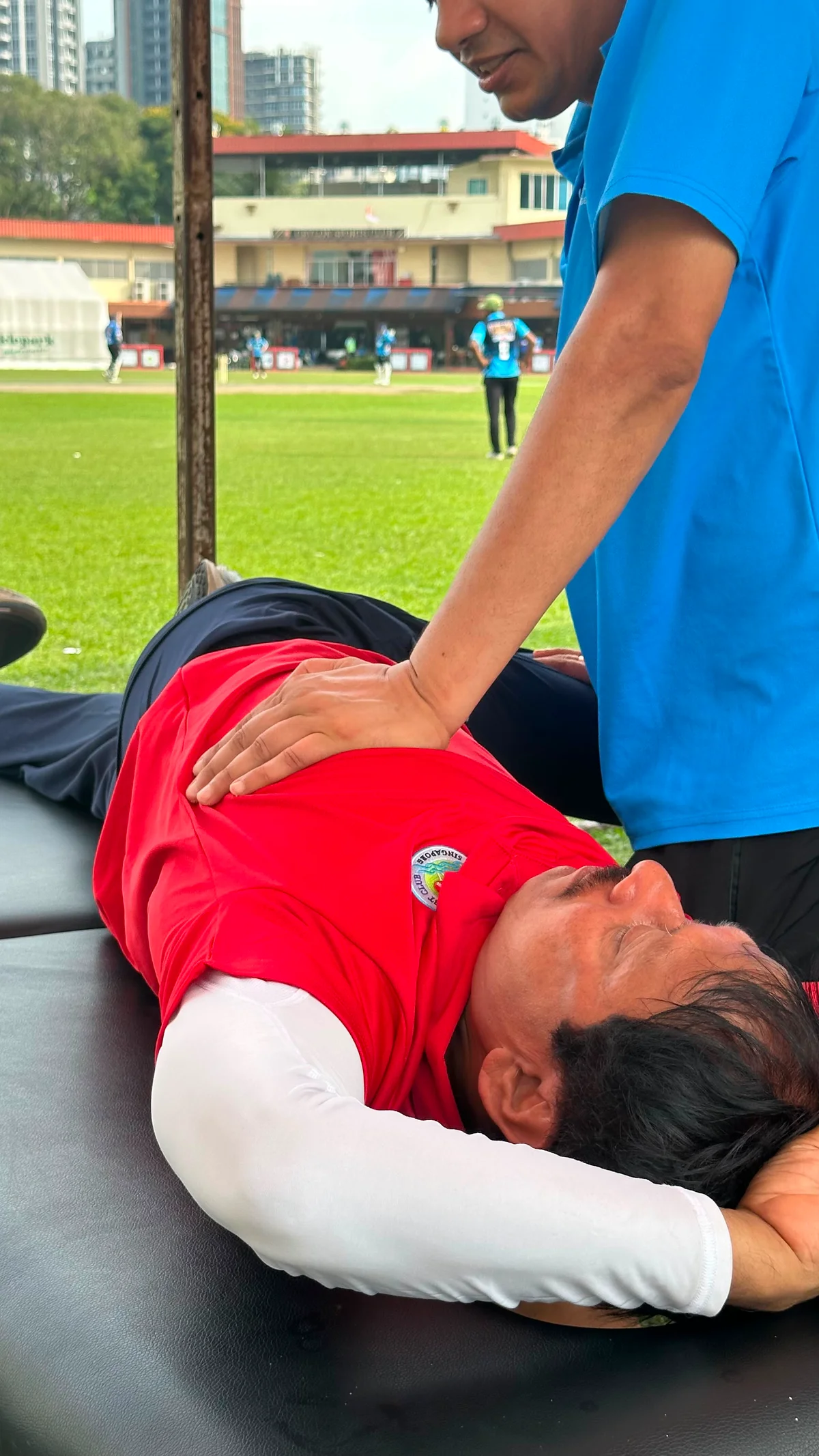
In August 2026, ACE Physio Sports was proud to be part of the Mariners Premier League (MPL) in Singapore, supporting athletes with physiotherapy and recovery services during the event.
For our team, it was a valuable opportunity to take the work we do every day in the clinic into a live sporting environment working around the demands of competition and helping athletes manage their bodies before, during and after play.
And this year's event was particularly special.
What Was the Mariners Premier League 2026?
The Mariners Premier League (MPL) is associated with the Mariners Cricket Club Singapore, a cricket and community organisation with strong links to Singapore's maritime and corporate community.
The 2026 event was part of a particularly significant period for Mariners Cricket Club.
The club hosted the '83 Legends Tour of Singapore, bringing members of India's historic 1983 World Cup-winning squad together in Singapore. The programme ran from 7 to 9 August 2026, with additional event activities planned around the tournament period.
The event included a range of activities around cricket, leadership and community, including a gala dinner, corporate interaction sessions, networking activities and a cricket match featuring the legends and Mariners Cricket Club.
The cricketing names connected with the tour included some of the most recognisable figures from India's 1983 World Cup-winning side, including Kapil Dev, Sunil Gavaskar, Krishnamachari Srikkanth, Dilip Vengsarkar, Mohinder Amarnath, Roger Binny, Syed Kirmani, Sandeep Patil, Madan Lal, Balwinder Sandhu and Kirti Azad.
That made the 2026 Mariners cricket programme about much more than simply another tournament.
It brought together competitive cricket, community, corporate participation and some of the most celebrated names in Indian cricket.
For ACE Physio Sports, it was also an opportunity to contribute from a different side of the sporting environment: helping athletes with recovery and physiotherapy support.
Why Physiotherapy Matters During a Cricket Tournament
Cricket places a very particular type of demand on the body.
It isn't necessarily continuous high-intensity exercise. Instead, players repeatedly move between periods of relatively low activity and short bursts of explosive effort.
A player may have to:
- Sprint between wickets.
- Accelerate after a ball.
- Stop suddenly while fielding.
- Change direction.
- Dive to stop a boundary.
- Throw repeatedly from different positions.
- Bowl at high intensity.
- Bat while rotating through the trunk.
- Remain in a crouched position for extended periods.
When these movements are repeated across training and competition, fatigue can start to influence movement quality.
A player who feels fine at the beginning of a tournament may start noticing tightness, stiffness or discomfort after several matches.
Sometimes it is simply normal post-exercise soreness.
Other times, it may be an early sign that something needs attention.
That distinction matters.
What Does an Event Physiotherapist Actually Do?
When people hear "sports physiotherapy at an event", they sometimes imagine that the physiotherapist simply treats an injured player and sends them back onto the field.
The reality is much broader.
Event physiotherapy can involve assessing an athlete's symptoms, understanding how the problem developed, providing appropriate treatment and helping the player make informed decisions about their next activity.
Depending on the individual situation, support may include:
- Injury assessment
- Recovery support
- Managing muscle tightness
- Soft-tissue treatment
- Mobility work
- Exercise-based rehabilitation
- Taping where appropriate
- Advice on activity modification
- Pre-match preparation
- Post-match recovery
- Return-to-play guidance
The approach also needs to be practical.
A player competing in a tournament doesn't necessarily have the same recovery options as someone attending a clinic for a routine appointment. There may be another match coming up, travel between venues or limited time before the next session.
That is where experience in sports physiotherapy in Singapore can be particularly useful.
The Physical Demands Can Be Different for Every Cricket Player
One of the interesting things about cricket is that there isn't one "typical" cricket injury.
A fast bowler, batter, wicketkeeper and fielder all place different demands on their bodies.
Fast Bowlers
Fast bowling involves repeated high-force movements through the entire body.
The:
- Shoulder
- Elbow
- Spine
- Hips
- Knees
- Ankles
can all be involved in generating and transferring force.
Repeated bowling can therefore place considerable demands on the athlete, particularly when training volume and recovery aren't well balanced.
Batters
Batting involves much more than simply swinging a bat.
Players repeatedly rotate through the trunk, transfer force through the hips and legs, run between wickets and sometimes make rapid movements to respond to the ball.
Depending on the athlete, discomfort can develop around the:
- Lower back
- Hip
- Groin
- Hamstrings
- Shoulder
- Wrist
Fielders
Fielding can be unpredictable.
A player might spend several minutes standing in position and then suddenly need to sprint, dive, stop or change direction.
That can place significant demands on the:
- Hamstrings
- Calves
- Groin
- Knees
- Ankles
- Shoulders
An awkward landing or sudden acceleration can also turn a relatively routine movement into an acute injury.
Wicketkeepers
Wicketkeepers spend a significant amount of time repeatedly squatting and rising while staying ready to react to the ball.
Over a long match or tournament, this can place considerable repetitive demand on the:
- Knees
- Hips
- Ankles
- Lower back
Individual strength, mobility, previous injuries and workload can all influence how well a player tolerates these demands.
Recovery Is More Than Just Treating an Injury
One of the biggest lessons from working around athletes is that you don't always need to wait until something hurts badly before paying attention to it.
A player might notice:
"My calf feels tighter than usual."
Or:
"My shoulder doesn't feel quite right after bowling."
Or:
"My groin feels uncomfortable when I change direction."
These symptoms don't automatically mean there is a serious injury.
But they are useful information.
Early attention can help an athlete understand whether the issue is simply fatigue or whether something needs to be modified before it develops into a more significant problem.
That is one reason recovery support can be valuable during tournaments.
ACE Physio Sports at MPL 2026
For ACE Physio Sports, being part of MPL 2026 was about bringing our clinical experience into an environment where athletes were actively competing, recovering and preparing for their next challenge.
Rather than looking at physiotherapy as something that only happens when an athlete is injured, the event highlighted the broader role of physiotherapy in sport:
assessment → treatment → recovery → rehabilitation → return to performance.
Our focus was on providing practical support to athletes while respecting the demands of competition and the individual's symptoms and needs.
It was also a reminder of why sports physiotherapy is about more than treating one painful area.
An athlete's training history, workload, previous injuries, movement patterns, recovery and sporting demands can all influence how they perform and recover.
Supporting Athletes Through Competition and Recovery
Being involved in a cricket tournament is different from treating an athlete during a normal clinic appointment.
During a tournament, players are often thinking about their next match, their performance and whether they will be able to continue playing. They may have only a limited amount of time between matches or training sessions to recover.
That means physiotherapy support needs to be practical.
The aim isn't always to completely eliminate every sensation of soreness before an athlete returns to the field. Instead, the focus is on understanding what the athlete is experiencing, identifying anything that may require further attention and providing appropriate support based on the individual's situation.
At MPL 2026, this meant being available to athletes as they navigated the physical demands of competitive cricket.
What Can Cricket Players Need Help With During a Tournament?
Every athlete is different, but some issues are particularly relevant to cricket.
Players may experience:
- Muscle tightness after a match.
- General post-match soreness.
- Shoulder discomfort after repeated throwing or bowling.
- Lower-back stiffness.
- Hamstring or calf tightness.
- Groin discomfort.
- Knee soreness.
- Ankle or foot problems.
- Fatigue after repeated matches.
- Previous injuries becoming noticeable again.
Not every symptom means that an athlete has sustained an injury.
Sometimes the body is simply responding to an increase in workload.
The important part is understanding the difference between normal post-exercise soreness and symptoms that may require further assessment.
Recovery Between Matches
Recovery becomes particularly important when athletes have multiple sessions or matches within a short period.
A player's recovery strategy may involve several components rather than one particular treatment.
Depending on the individual, this can include:
Movement and Mobility
Gentle movement can help an athlete stay mobile after periods of sitting, travelling or playing.
Mobility work may focus on areas that feel particularly restricted following training or competition.
Soft-Tissue Treatment
Hands-on treatment may be used when appropriate to help manage muscle tightness or discomfort.
This isn't about simply applying as much pressure as possible.
The treatment should be adapted to the athlete's symptoms, the stage of competition and what they need to do next.
Exercise
Simple exercises can sometimes be useful between matches to maintain movement and gradually restore strength or control.
The exercises need to match the athlete's current condition rather than being selected simply because they are popular online.
Recovery Advice
Physiotherapy support can also involve education.
An athlete may need guidance around:
- When to rest.
- When to move.
- How much activity is appropriate.
- Whether they should modify a particular movement.
- When a symptom needs further assessment.
- How to approach their next training session.
This practical advice can be just as valuable as hands-on treatment.
When Does Muscle Soreness Become an Injury?
This is something athletes often find difficult to judge.
After an intense cricket session, it isn't unusual to feel tired or sore.
However, certain symptoms deserve more attention, particularly if they:
- Become progressively worse.
- Affect normal movement.
- Change the way you run or walk.
- Affect your ability to bowl, bat or field.
- Persist between sessions.
- Keep returning whenever you increase activity.
- Are associated with sudden sharp pain or a specific injury event.
An athlete shouldn't have to guess whether something is safe to continue playing with.
A proper assessment can help determine whether the symptoms are likely to be related to fatigue, overload or an injury requiring a more structured rehabilitation approach.
Cricket Rehabilitation Doesn't End When Pain Improves
One of the biggest mistakes athletes can make is assuming that feeling better means they are immediately ready to return to full competition.
Pain is only one part of recovery.
An athlete may feel comfortable walking but still lack the strength, control or confidence required for:
- Sprinting.
- Sudden changes of direction.
- Jumping.
- Bowling repeatedly.
- Throwing.
- Diving.
- Running between wickets.
This is why sports rehabilitation should gradually reproduce the demands of the sport.
For example, a player returning after a lower-limb injury may progress from basic strength exercises to running, then acceleration and deceleration, and eventually cricket-specific movements.
Returning to Cricket After an Injury
Returning to cricket isn't necessarily an all-or-nothing decision.
A player may be able to perform some activities comfortably while still being unable to tolerate others.
For example, a batter recovering from a lower-limb injury might be comfortable performing controlled exercises but not yet ready for repeated sprinting between wickets.
Similarly, a bowler may be able to perform general strength exercises but require a gradual increase in bowling volume before returning to full training.
A structured return-to-sport programme can therefore involve several stages.
Stage 1: Restore Comfortable Movement
The athlete needs to regain comfortable everyday movement and basic function.
Stage 2: Rebuild Strength
Strength and control are progressively developed around the affected area and the rest of the kinetic chain.
Stage 3: Introduce Running and Dynamic Movement
Depending on the injury, this may include jogging, acceleration, deceleration and changes of direction.
Stage 4: Sport-Specific Work
The athlete gradually returns to movements that replicate cricket demands.
This could include:
- Bowling.
- Batting.
- Throwing.
- Sprinting between wickets.
- Fielding drills.
- Diving and landing.
Stage 5: Return to Competition
Only when the athlete has progressed appropriately should full competitive activity be considered.
The exact progression varies considerably depending on the injury and the individual athlete.
Why Cricket-Specific Rehabilitation Matters
A player doesn't simply need to be "fit."
They need to be prepared for the specific movements their position requires.
A fast bowler may need to tolerate repeated high-intensity bowling.
A fielder needs to accelerate, decelerate and change direction.
A batter needs to rotate, sprint and repeatedly perform explosive movements.
A wicketkeeper needs to tolerate repeated squatting and rising.
This is why rehabilitation should eventually move beyond isolated exercises and towards the actual demands of the sport.
Beyond the Treatment Table
One of the things we value about working in a sporting environment is seeing physiotherapy as more than something that happens when an athlete gets injured.
Good sports physiotherapy can help athletes understand their bodies and make better decisions around training and recovery.
That could mean recognising that a recurring symptom shouldn't simply be ignored, understanding why a particular movement is causing discomfort or learning how to gradually increase training after an injury.
The ultimate objective is not to keep an athlete dependent on treatment.
It is to help them become more confident and capable of managing their own training and recovery.
Our Experience at the Mariners Premier League
For ACE Physio Sports, being part of MPL 2026 was an opportunity to experience this environment first-hand.
Working around cricket athletes provided a different perspective from a conventional clinic setting.
The tournament environment is fast-moving. Athletes have different schedules, different physical demands and different levels of experience. Some may simply need recovery support, while others may require more detailed assessment or rehabilitation advice.
That variety is one of the things that makes event physiotherapy so rewarding.
It also reinforces an important principle:
There isn't one recovery strategy that works for every athlete.
The right approach depends on the person's symptoms, sport, training load, injury history and immediate goals.
What We Took Away From MPL 2026
One of the biggest takeaways from the event was the importance of treating the athlete rather than just the painful area.
A sore shoulder isn't always just a shoulder problem.
A tight hamstring isn't necessarily caused only by the hamstring.
A stiff lower back may need to be considered alongside the athlete's movement, workload and sporting demands.
This is why assessment matters.
It gives the physiotherapist an opportunity to understand the bigger picture and decide what needs to be addressed.
For ACE Physio Sports, that philosophy is central to the way we approach sports rehabilitation both at events and in the clinic.
Conclusion
The Mariners Premier League 2026 was a memorable cricket event in Singapore, bringing together players, cricket communities and an opportunity to celebrate the sport at multiple levels.
For ACE Physio Sports, being part of the event was an opportunity to support athletes outside the traditional clinic environment and experience first-hand the demands that tournament cricket can place on the body.
From recovery and muscle tightness to injury management and rehabilitation, the experience reinforced an important principle:
Good sports physiotherapy isn't simply about treating an injury. It's about helping athletes understand their bodies, manage their workload and build the capacity they need for the sport they love.
Whether you're competing in a cricket tournament, playing recreationally at the weekend or simply trying to stay active, listening to your body and addressing persistent problems early can make a significant difference to your ability to keep doing what you enjoy.
At ACE Physio Sports, we work with athletes and active individuals across Singapore, including the East Coast, Katong, Marine Parade and Bedok areas, helping them manage sports injuries, improve physical performance and return to activity with confidence.
If you're experiencing persistent pain or an injury that's affecting your cricket, training or everyday activities, a physiotherapy assessment can help you understand what's going on and what your next steps should be.