
Groin Pain: Causes, Treatment & Physiotherapy

Introduction
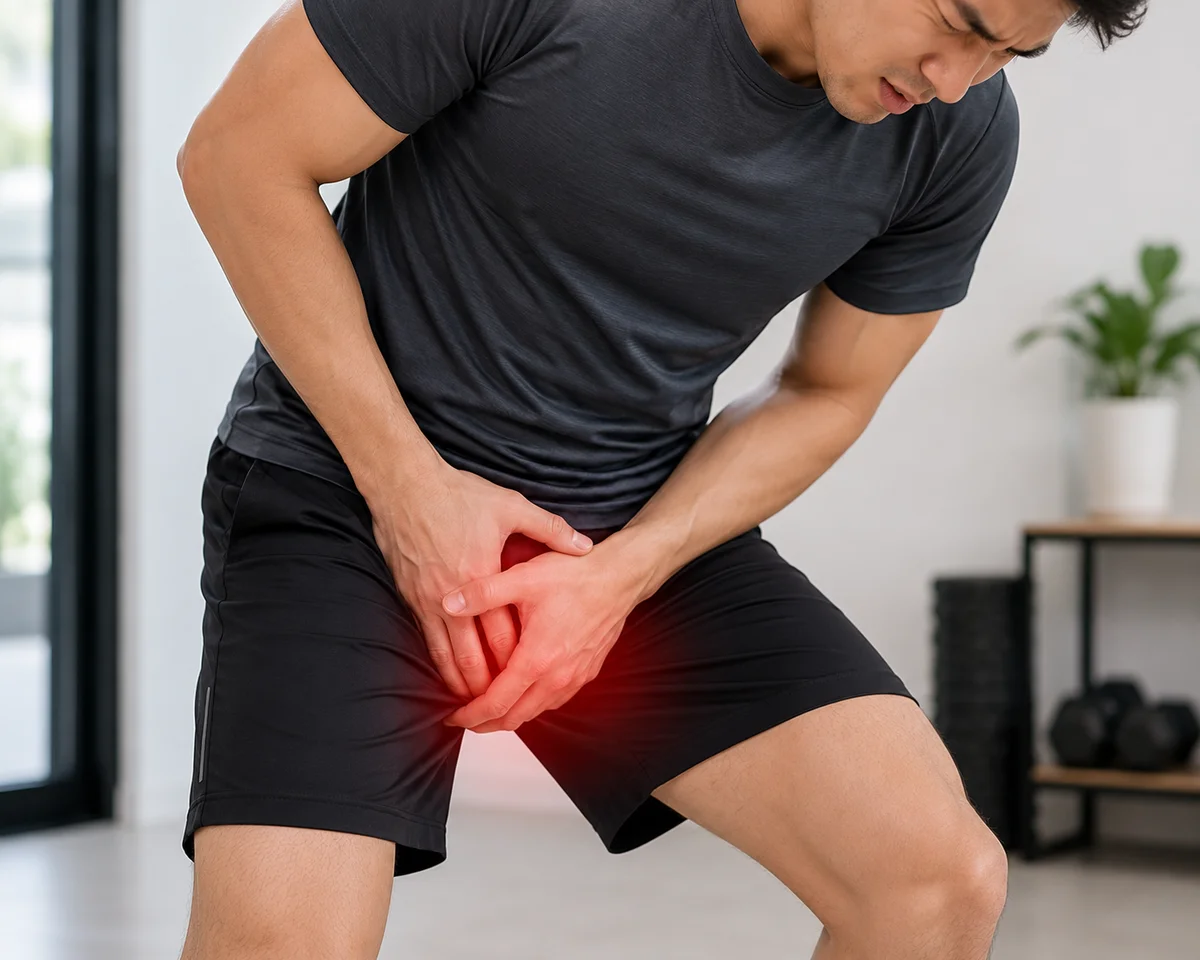
Groin pain can be frustrating because it often appears during activities you enjoy the most. One day you might be sprinting across a football field, completing a heavy squat session or going for your usual run, and the next you're experiencing discomfort every time you walk, change direction or even get out of the car.
For some people, the pain develops suddenly after a quick movement or awkward stretch. For others, it builds up gradually over weeks or months until everyday activities become uncomfortable.
Although groin pain is particularly common among athletes, it isn't limited to people who play competitive sport. We regularly see runners, gym-goers, cyclists, golfers, tennis and padel players, as well as office workers who have become more active after long periods of sitting.
One of the biggest challenges is that "groin pain" isn't actually a diagnosis. It's simply a description of where you feel pain. The discomfort may come from muscles, tendons, the hip joint, surrounding soft tissues or, in some cases, structures outside the groin altogether.
That's why two people with pain in exactly the same area can require completely different treatment.
At ACE Physio Sports, we assess and treat people from East Coast Road, Katong, Marine Parade, Siglap, Bedok and across Singapore who are experiencing groin pain due to sports injuries, gym training, running and everyday activities. Rather than focusing only on where it hurts, we aim to understand why the pain developed in the first place so that treatment addresses the underlying cause rather than simply managing symptoms.
In this guide, we'll explain the common causes of groin pain, how to recognise different symptoms, when physiotherapy may help, what recovery typically involves and when it's important to seek further medical assessment.
What Is Groin Pain?
The groin is the area where your abdomen, pelvis and upper thigh meet.
Several muscles, tendons, ligaments, joints and nerves pass through this relatively small region, which is why identifying the exact source of pain isn't always straightforward.
People describe groin pain in different ways, including:
- A sharp pain when sprinting or changing direction.
- A dull ache after running or exercising.
- Tightness in the inner thigh.
- Pain when lifting the knee.
- Discomfort while walking.
- Pain during lunges or squats.
- Difficulty getting in and out of a car.
- Pain when coughing or sneezing in some cases.
Some people notice symptoms only during sport, while others begin to experience discomfort during simple daily activities.
The location, timing and type of pain often provide important clues about what may be contributing to your symptoms.
Why Does Groin Pain Happen?
Your groin helps transfer force between your upper and lower body every time you walk, run, jump, kick or change direction.
Activities that involve sudden acceleration, twisting or repeated kicking place particularly high demands on this region.
When the load placed on the tissues becomes greater than what they can comfortably tolerate, pain may develop.
This doesn't always mean you've suffered a serious injury.
Sometimes it's the result of:
- Increasing training too quickly.
- Returning to sport after a break.
- Reduced hip strength.
- Muscle fatigue.
- Limited hip mobility.
- Repetitive sporting movements.
- Previous injuries affecting movement patterns.
In other situations, pain may develop following one specific movement, such as an awkward tackle in football or a heavy lift in the gym.
Understanding why your symptoms started is often just as important as identifying where the pain is located.
Where Is Groin Pain Usually Felt?
Although everyone experiences symptoms differently, groin pain is commonly felt in one or more of the following areas:
- The inner thigh.
- The crease between the hip and upper thigh.
- The front of the hip.
- Around the pubic bone.
- Deep inside the groin.
- Occasionally spreading towards the lower abdomen or upper thigh.
Some people notice pain only while exercising.
Others continue to experience discomfort while walking, climbing stairs, turning in bed or standing on one leg.
Because several different structures can produce pain in similar locations, it's important not to assume that all groin pain is simply a "pulled muscle."
Read what types of groin pain are there and what and how we treat types of groin pain at our clinic.
Groin Pain or Hip Pain?
One of the most common questions people ask is:
"How do I know if it's my groin or my hip?"
The answer isn't always obvious.
Pain felt at the front of the hip can sometimes be mistaken for groin pain, while pain originating from the groin muscles may seem as though it's coming from the hip joint.
As a general guide:
Groin pain often:
- Is felt around the inner thigh or groin crease.
- Becomes worse during sprinting or kicking.
- Increases when changing direction quickly.
- May feel tender when pressing over the inner thigh muscles.
Hip pain often:
- Feels deeper inside the joint.
- May become uncomfortable after prolonged sitting.
- Can cause stiffness when getting up from a chair.
- May reduce hip movement over time.
Because symptoms frequently overlap, it's important not to rely on location alone when trying to identify the cause.
A thorough assessment considers your movement, strength, training history and symptoms together rather than focusing on a single painful area.
How Is Groin Pain Diagnosed?
One of the biggest misconceptions is that every groin injury is simply a "pulled muscle."
In reality, groin pain can originate from several different structures, including the adductor muscles, hip flexors, tendons, hip joint or surrounding soft tissues. Because these conditions often produce similar symptoms, identifying the exact source of pain is an important first step.
A physiotherapy assessment typically includes:
- Understanding how and when your symptoms started.
- Discussing your sport, occupation and daily activities.
- Assessing walking, squatting, lunging and other functional movements.
- Testing hip strength and flexibility.
- Assessing movement around the pelvis and lower limbs.
- Identifying activities that reproduce your symptoms.
Rather than treating every patient the same way, the assessment helps determine why your groin pain developed and what factors may be contributing to it.
For some people, the problem is a muscle strain. For others, it may be reduced hip strength, limited mobility or a sudden increase in training load.
At ACE Physio Sports, every assessment begins with a comprehensive Sports Physiotherapy evaluation to identify the underlying cause rather than simply treating the painful area.
International consensus on groin pain in athletes Read more here.
When Should You See a Physiotherapist?
Not every episode of groin discomfort requires treatment immediately.
Mild muscle soreness after an unfamiliar workout may improve with time and appropriate recovery.
However, it's worth arranging an assessment if:
- Pain continues for more than a few days.
- Walking becomes uncomfortable.
- Running or sport is no longer possible.
- The pain keeps returning whenever you exercise.
- You notice reduced hip movement or strength.
- Symptoms are affecting your work or daily activities.
Seeking advice early can often help prevent a relatively minor issue from becoming a long-term problem.
Physiotherapy Treatment for Groin Pain
Treatment depends on the cause of your symptoms rather than the location of your pain.
At ACE Physio Sports, rehabilitation is personalised according to your assessment findings, activity level and recovery goals.
Depending on your condition, your treatment programme may include:
Progressive Strengthening
Strengthening the muscles around the hips, pelvis and lower limbs helps improve how your body tolerates movement and sporting activities.
Rather than focusing only on the painful muscle, rehabilitation often targets the surrounding muscles that contribute to movement and stability.
Your rehabilitation programme may also include our Exercise Testing & Prescription service to identify movement deficits and build a progressive strengthening plan.
Mobility Exercises
Limited movement around the hips or pelvis may increase stress on surrounding tissues.
Appropriate mobility exercises are prescribed based on your assessment rather than using the same stretches for everyone.
Manual Therapy
Hands-on treatment may help improve comfort, reduce muscle tightness and prepare the body for rehabilitation exercises.
Manual therapy is most effective when combined with an active exercise programme rather than being used on its own.
Where appropriate, Sports Massage Therapy may also be used alongside rehabilitation to help manage muscle tightness and support recovery.
Education and Load Management
One of the most important aspects of recovery is understanding how to modify your activities without stopping them completely.
This may involve:
- Adjusting training volume.
- Reducing high-speed running temporarily.
- Modifying gym exercises.
- Gradually increasing activity as symptoms improve.
Learning how to manage training load often plays a significant role in preventing symptoms from returning.
Can You Continue Exercising With Groin Pain?
This is one of the most common questions people search online.
The answer depends on what's causing your symptoms.
If you're experiencing mild discomfort, modifying your training rather than stopping completely may be appropriate.
For example:
- Reducing sprinting while continuing upper-body strength training.
- Replacing running with cycling or swimming temporarily.
- Decreasing training intensity while symptoms settle.
However, if pain is severe, getting worse or significantly affecting your movement, continuing to train through it may delay recovery.
The goal isn't simply to rest.
It's to find the right balance between protecting the injured tissues and maintaining overall fitness.
Common Activities That Can Trigger Groin Pain
Different activities place different demands on the groin.
Some of the most common include:
Football
Repeated kicking, sprinting and rapid changes of direction make football one of the sports most commonly associated with groin injuries.
Running
Increasing weekly mileage too quickly or introducing hill training without gradual progression may contribute to groin discomfort.
If your symptoms develop during training, a Running Assessment may help identify movement patterns or training factors contributing to your pain.
Gym Training
Heavy squats, lunges, deadlifts and explosive lower-body exercises can overload the muscles around the hips and groin, particularly if training volume increases rapidly.
Tennis and Padel
Frequent lateral movement, lunging and sudden acceleration place repeated stress on the groin muscles throughout a match.
Recovery: How Long Does Groin Pain Take to Heal?
Another common question is:
"How long will my groin injury take to recover?"
The answer depends on several factors, including:
- The underlying diagnosis.
- The severity of the injury.
- Your general health.
- How quickly treatment begins.
- Whether you continue overloading the injured tissues.
A mild muscle strain may improve within a few weeks, while more persistent tendon or hip-related problems can require a longer rehabilitation programme.
Rather than focusing on returning by a specific date, recovery should be guided by:
- Pain levels.
- Strength.
- Movement quality.
- Confidence during sport-specific activities.
Returning too early increases the likelihood of symptoms recurring.
Can Groin Pain Be Prevented?
Although not every injury can be prevented, many cases of groin pain develop gradually because the demands placed on the body increase faster than it can adapt.
A few simple habits can significantly reduce your risk of developing groin problems.
Build Strength Gradually
Strong hip and groin muscles help absorb the forces created during running, jumping, sprinting and changing direction.
Increasing training gradually gives your muscles and tendons time to adapt while reducing unnecessary overload.
Don't Skip Your Warm-Up
A proper warm-up prepares your muscles and joints for exercise.
Before sport or gym training, spend a few minutes performing:
- Dynamic hip mobility exercises
- Bodyweight lunges
- Light jogging
- Controlled leg swings
- Progressive warm-up sets before heavier lifts
Rather than stretching aggressively, the goal is to prepare your body for the movements you're about to perform.
Manage Your Training Load
One of the biggest contributors to groin injuries is increasing activity too quickly.
This might include:
- Suddenly increasing running mileage.
- Playing several football matches in one weekend.
- Returning to heavy squats after weeks away from the gym.
- Adding sprint training too quickly.
Progressive loading usually produces better long-term results than rapid increases in intensity or volume.
Prioritise Recovery
Recovery is just as important as training itself.
Good recovery includes:
- Getting enough sleep.
- Eating a balanced diet.
- Staying hydrated.
- Scheduling recovery days.
- Listening to early warning signs rather than training through persistent pain.
Common Myths About Groin Pain
Myth 1: Every Groin Pain Is Just a Pulled Muscle
Not necessarily.
While muscle strains are common, groin pain can also originate from tendons, the hip joint, surrounding soft tissues or other structures.
That's why a proper assessment is often more valuable than trying to diagnose yourself based on where it hurts.
Myth 2: Complete Rest Is the Best Treatment
Many people believe they should stop all activity until the pain disappears.
In reality, prolonged rest may slow recovery for some conditions.
Most rehabilitation programmes focus on modifying activity, rebuilding strength and gradually returning to normal movement rather than avoiding exercise altogether.
Myth 3: Stretching Alone Will Fix Groin Pain
Stretching may help if muscle tightness is contributing to your symptoms.
However, if the underlying issue involves weakness, tendon overload or movement mechanics, stretching alone is unlikely to solve the problem.
Myth 4: Once the Pain Settles, You're Fully Recovered
Pain often improves before strength, flexibility and movement control have fully returned.
Returning to full training too quickly can increase the likelihood of the injury recurring.
Rehabilitation should focus not only on reducing pain but also on restoring strength and confidence before returning to sport.
A Patient Story
A recreational football player from Katong visited ACE Physio Sports after developing sharp groin pain while changing direction during a weekend match.
Although he was able to finish the game, he noticed increasing discomfort over the following days whenever he sprinted, kicked a ball or climbed stairs.
He initially assumed he had simply "pulled a muscle" and rested for a week, but every attempt to return to football brought the pain back.
Following a comprehensive assessment, we found that the problem wasn't just a strained adductor muscle. Reduced hip strength, limited single-leg control and a sudden increase in match intensity had all contributed to the injury.
His rehabilitation programme combined progressive strengthening, movement retraining, gradual return-to-running drills and sport-specific exercises.
Over the following weeks, he returned to football with improved confidence and a better understanding of how to manage his training load to reduce the risk of recurrence.
Every person's recovery is different, but identifying the underlying cause is often the key to achieving long-term improvement rather than simply treating symptoms.
Conclusion
Groin pain is a common problem among runners, footballers, gym-goers and active individuals, but it's not something you simply have to "push through."
Because the groin contains several muscles, tendons and joints that work together during movement, identifying the true source of pain is often the most important step towards successful recovery.
For many people, treatment involves much more than relieving symptoms. Progressive strengthening, movement retraining, load management and returning to activity at the right pace all play an important role in achieving long-term results.
At ACE Physio Sports, we help runners, footballers, gym enthusiasts, tennis and padel players, and active individuals from East Coast Road, Katong, Marine Parade, Siglap, Bedok and across Singapore recover from groin pain with personalised, evidence-based rehabilitation. Our goal is not only to reduce pain but to help you move confidently and return to the activities you enjoy with a lower risk of recurrence.
If your groin pain is affecting your sport, training or everyday life, seeking an early assessment can help identify the underlying cause and create a rehabilitation plan tailored to your goals.