
Sports Massage: Benefits, Recovery & When You Need One

Introduction
Whether you're training for your first 5km run, preparing for a marathon, spending long hours in the gym, competing in football or padel, or simply trying to stay active, your body is constantly adapting to physical demands. While exercise is one of the best investments you can make in your long-term health, it can also lead to muscle tightness, fatigue and soreness that may affect how you move and perform.
This is where sports massage often becomes part of an athlete's recovery routine.
Despite its name, sports massage isn't only for elite athletes. Recreational runners, gym-goers, cyclists, swimmers, office workers and anyone with an active lifestyle may benefit from sports massage when it is used appropriately.
One of the biggest misconceptions is that sports massage is simply a stronger version of a relaxation massage.
It isn't.
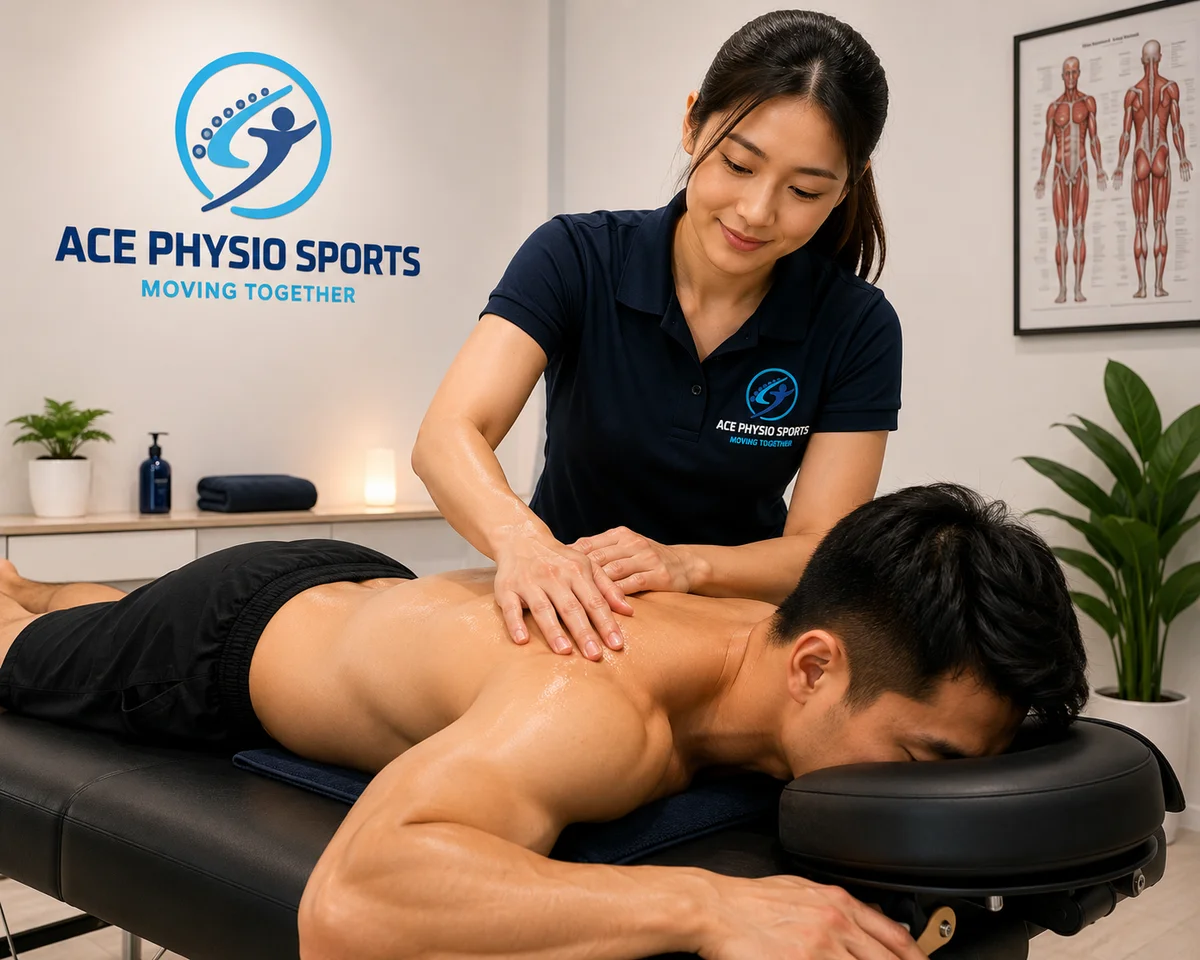
Sports massage is a specialised form of manual therapy that focuses on muscles and soft tissues affected by training, repetitive movement and physical activity. Depending on your goals, it may be used to support recovery after exercise, prepare your body before competition, improve movement or complement a structured rehabilitation programme.
At ACE Physio Sports, we regularly provide sports massage alongside physiotherapy for runners, strength athletes, weekend warriors and active individuals from East Coast Road, Katong, Marine Parade, Siglap, Bedok and across Singapore. Rather than following the same routine for everyone, treatment is tailored to your sport, activity level, symptoms and recovery goals.
In this guide, we'll explain what sports massage is, how it works, who it may help, what current research says and how it differs from other forms of massage. We'll also answer some of the most common questions people ask before booking their first session.
What Is Sports Massage?
Sports massage is a specialised hands-on treatment designed to support recovery, improve movement and help active people manage the physical demands of exercise and sport.
Unlike a traditional relaxation massage, which mainly aims to promote relaxation and reduce stress, sports massage focuses on muscles, tendons, fascia and other soft tissues that are repeatedly loaded during physical activity.
Treatment is always individualised.
For example:
- A marathon runner preparing for race day has very different recovery needs from someone returning to the gym after several months away.
- A competitive tennis player may require treatment targeting the shoulder and forearm, while a cyclist may benefit from techniques focusing on the hips, quadriceps and calves.
- An office worker experiencing neck and shoulder tightness from prolonged desk work may require a completely different approach again.
The goal isn't simply to "massage sore muscles."
Instead, sports massage aims to support movement, reduce excessive muscle tension where appropriate and complement an active rehabilitation programme when needed.
How Does Sports Massage Work?
Every training session places mechanical stress on muscles, tendons and connective tissues.
This is a normal part of getting stronger.
As your body adapts, microscopic changes occur within muscle fibres. Combined with repeated movement, these changes may contribute to temporary stiffness, muscle tightness or soreness after exercise.
Sports massage uses a range of manual therapy techniques that may help improve comfort, encourage movement and reduce the feeling of muscular tightness.
Depending on your assessment, treatment may include:
- Soft tissue mobilisation
- Deep tissue techniques
- Trigger point therapy
- Myofascial release
- Assisted stretching
- Muscle compression
- Passive movement techniques
Not every technique is appropriate for every person.
The treatment provided to a footballer recovering after a match is likely to differ from that of a recreational runner preparing for a marathon or a gym-goer experiencing ongoing calf tightness.
Rather than following a standard routine, treatment should reflect your goals, symptoms and training demands.
Does Sports Massage Actually Work?
One of the most common questions people ask is:
"Does sports massage actually work, or does it just feel good?"
The answer is more balanced than many people expect.
Current research suggests that sports massage may provide short-term benefits for some individuals, particularly when used as part of a broader recovery or rehabilitation programme.
Studies have found that sports massage may help:
- Reduce the perception of muscle soreness after exercise.
- Improve short-term flexibility.
- Reduce feelings of muscle tightness.
- Promote relaxation after training.
- Improve overall recovery experience for some athletes.
However, it's important to understand what sports massage cannot do.
Sports massage isn't a cure for ligament injuries, tendon injuries, muscle tears or persistent joint problems. It also shouldn't replace strengthening exercises, movement retraining or progressive rehabilitation when these are required.
Instead, sports massage works best as one component of a comprehensive recovery strategy that may also include:
- Progressive strength training
- Mobility exercises
- Load management
- Recovery planning
- Physiotherapy
- Sleep and nutrition
At ACE Physio Sports, we view sports massage as one tool within a broader evidence-based rehabilitation programme rather than a standalone solution.
Read Article on Systematic review on sports massage and recovery.
Who Can Benefit From Sports Massage?
Although many people associate sports massage with professional athletes, a much wider range of people may benefit from it.
Runners
Whether you're preparing for the Standard Chartered Singapore Marathon or simply increasing your weekly mileage, running places repetitive demands on the calves, hamstrings, quadriceps and hips.
Sports massage may help runners manage muscle tightness during periods of higher training volume while complementing strength training and recovery.
Gym-Goers
Heavy strength training can lead to temporary muscle soreness and fatigue, particularly during periods of progressive overload.
Many recreational lifters choose sports massage alongside appropriate recovery strategies to help them continue training consistently.
Football, Rugby and Basketball Players
Sports involving sprinting, jumping and rapid changes of direction place significant demands on the lower limbs.
Recovery strategies often become increasingly important during busy training and competition schedules.
Padel and Tennis Players
With padel becoming increasingly popular across Singapore, we are seeing more players experiencing shoulder, elbow, forearm and calf tightness associated with repetitive overhead strokes and rapid court movement.
Sports massage may help complement a broader rehabilitation programme while supporting recovery between matches.
Cyclists
Long hours in the saddle often contribute to tightness in the quadriceps, hip flexors, calves and lower back.
Addressing these areas may help improve comfort during longer rides.
Swimmers
Repetitive overhead movement places ongoing demands on the shoulders, upper back and neck.
Sports massage is often used alongside mobility and strengthening exercises to support shoulder function.
Office Workers
You don't need to compete in sport to benefit from sports massage.
Many people spend long hours sitting at a desk, leading to muscle tightness around the neck, shoulders and lower back.
For some individuals, sports massage forms one part of a wider treatment plan that also includes posture advice, strengthening exercises and movement education.
Sports Massage Is About More Than Recovery
Recovery is only one reason people book a sports massage.
Some individuals choose regular treatment to:
- Prepare for competitions.
- Manage training load during busy seasons.
- Improve movement before returning to sport.
- Reduce recurring muscle tightness.
- Complement physiotherapy after injury.
- Stay active while managing demanding work and training schedules.
Rather than waiting until discomfort becomes severe, many athletes include sports massage within their ongoing recovery routine to help them continue training consistently.
Benefits of Sports Massage
Sports massage is often associated with recovery after training, but its role goes beyond helping you feel less sore after a workout.
When used appropriately, sports massage may support movement, recovery and overall training consistency. The benefits, however, vary depending on your goals, the type of activity you perform and any underlying injuries or conditions.
Here are some of the ways sports massage may help.
1. May Reduce Muscle Soreness After Exercise
One of the most common reasons people book a sports massage is to manage muscle soreness after training.
After a challenging gym session, long-distance run or competitive match, it's normal to experience Delayed Onset Muscle Soreness (DOMS). This type of soreness usually develops several hours after exercise and peaks within the next day or two.
While sports massage doesn't eliminate DOMS completely, some research suggests it may help reduce the perception of soreness and improve comfort during recovery.
This can be particularly useful during periods of increased training volume when maintaining consistency is important.
2. May Improve Short-Term Flexibility and Movement
Tight muscles don't always mean your muscles are "short."
Sometimes they simply feel stiff after repeated training or prolonged sitting.
Sports massage may help improve short-term movement by reducing the sensation of muscle tightness, allowing you to move more comfortably during training or everyday activities.
This is one reason many athletes choose treatment before returning to competition after heavy training blocks.
3. Supports Recovery Between Training Sessions
Recovery isn't only about resting.
It's about helping your body adapt to the demands of training.
Sports massage is often included alongside:
- Strength training
- Mobility work
- Recovery runs
- Sleep optimisation
- Nutrition
- Hydration
Rather than replacing these strategies, sports massage complements them.
Athletes who train several times per week often use sports massage as part of their overall recovery routine rather than waiting until discomfort develops.
4. Helps You Stay Consistent
One missed training session rarely affects long-term progress.
Repeated interruptions because of persistent muscle tightness or recurring discomfort are a different story.
Many recreational athletes choose sports massage because it helps them continue training comfortably during busy periods rather than constantly stopping because something feels tight.
Consistency is usually more valuable than occasional perfect workouts.
5. Complements Physiotherapy Rehabilitation
Sports massage is rarely the entire solution for an injury.
If you're recovering from:
- a muscle strain,
- tendon injury,
- ligament injury,
- persistent shoulder pain,
- knee pain,
- Achilles tendinopathy,
- or lower back pain,
massage alone is unlikely to address the underlying cause.
At ACE Physio Sports, sports massage is often combined with progressive strengthening, movement retraining and exercise-based rehabilitation to support a more complete recovery.
This approach addresses both your symptoms and the factors contributing to them.
Sports Massage vs Deep Tissue Massage
One of the most common questions people ask is:
"Is sports massage the same as deep tissue massage?"
Not quite.
Although both treatments involve hands-on techniques and may feel similar at times, they are designed for different purposes.
Sports Massage
Sports massage is specifically tailored to your activity level, sport and recovery goals. It is often recommended for people who exercise regularly or participate in sports.
A sports massage typically:
- Is designed around your sport, activity and training demands.
- May include a movement or biomechanical assessment before treatment.
- Can be used before competition, after training or during rehabilitation.
- Often forms part of a broader physiotherapy or rehabilitation programme.
- Is tailored to your current training load, injury history and recovery goals.
- Focuses on helping you move, recover and perform more effectively.
Deep Tissue Massage
Deep tissue massage focuses on relieving muscle tension and tightness throughout the body and isn't necessarily sport-specific.
A deep tissue massage generally:
- Targets areas of muscular tension and stiffness.
- Uses slower, deeper pressure to work through the soft tissues.
- Is commonly chosen for general muscle aches rather than sports performance.
- May be provided as a standalone treatment without rehabilitation exercises.
- Is less focused on movement assessment or sport-specific demands.
- Aims to improve comfort and reduce muscular tightness.
Is Sports Massage Painful?
This is probably one of the biggest concerns for first-time patients.
The answer is:
Not necessarily.
Some techniques may feel intense, particularly when treating areas of increased muscle tension.
However, treatment should always remain within a level you can comfortably tolerate.
Excessive pain isn't a sign that treatment is working better.
Your physiotherapist or sports massage therapist should communicate throughout the session, adjusting pressure according to your symptoms and treatment goals.
For many people, sports massage feels more like a "good discomfort" rather than severe pain.
When Is the Best Time to Have a Sports Massage?
The timing depends on why you're booking treatment.
Before Competition
Some athletes schedule a lighter sports massage before an event to help them feel prepared without leaving muscles fatigued.
The aim isn't to create soreness but to promote comfortable movement before competition.
After Competition
Following a marathon, football match, triathlon or heavy gym session, sports massage may form part of a broader recovery strategy alongside hydration, nutrition, sleep and active recovery.
During Regular Training
Many recreational athletes schedule sports massage during periods of increased training volume to help manage muscle tightness and maintain consistency.
There isn't a single schedule that works for everyone.
The ideal frequency depends on your sport, training load and individual goals.
Can Sports Massage Improve Athletic Performance?
Sports massage shouldn't be viewed as a shortcut to better performance.
It won't suddenly make you faster, stronger or more flexible overnight.
However, by supporting recovery, improving comfort and helping athletes train more consistently, sports massage may indirectly contribute to better long-term performance.
The greatest improvements in performance still come from:
- Well-designed training
- Progressive strength programmes
- Skill development
- Adequate recovery
- Nutrition
- Sleep
Sports massage simply complements these foundations.
Common Conditions Where Sports Massage May Help
Sports massage is commonly used alongside physiotherapy for individuals experiencing:
- Muscle tightness after training
- Post-exercise soreness (DOMS)
- Calf tightness in runners
- Hamstring tightness
- Quadriceps tightness
- Neck and shoulder tension
- Lower back muscle tightness
- Gluteal muscle tightness
- Forearm tightness in racquet sports
- General recovery between competitions
The specific treatment always depends on a thorough assessment rather than applying the same approach to every condition.
How Often Should You Get a Sports Massage?
One of the most common questions we hear is:
"How often should I get a sports massage?"
There isn't a one-size-fits-all answer.
The ideal frequency depends on your activity level, training schedule, recovery goals and whether you're managing an injury.
For example:
Recreational Gym-Goers
If you train two to four times a week and occasionally experience muscle tightness or soreness, a sports massage every few weeks may be enough to complement your recovery routine.
Runners Preparing for an Event
During marathon or race preparation, some runners choose more regular sports massage sessions to help manage increasing training loads and maintain comfortable movement.
Competitive Athletes
Athletes with frequent training sessions or competitions often include sports massage as part of their overall recovery plan alongside strength training, nutrition, mobility work and adequate rest.
People Recovering From Injury
If you're recovering from a sports injury, sports massage may be incorporated into a broader physiotherapy programme where appropriate. The frequency should always be guided by your physiotherapist and your individual rehabilitation goals.
Rather than following a fixed schedule, sports massage should support your training and recovery—not become something you feel you "must" do every week.
When Sports Massage May Not Be Appropriate
Although sports massage can benefit many active people, there are situations where treatment should be postponed or modified.
You should seek professional advice before having a sports massage if you have:
- A recent fracture or suspected broken bone.
- An acute muscle tear or significant ligament injury.
- An active infection or fever.
- Open wounds or skin infections in the treatment area.
- Deep vein thrombosis (DVT) or suspected blood clots.
- Severe unexplained swelling.
- A medical condition where massage has been specifically advised against.
If you're unsure whether sports massage is appropriate for your situation, a physiotherapy assessment can help determine the safest and most effective treatment approach.
Can Sports Massage Prevent Injuries?
This is a question that's becoming increasingly common, especially among runners and gym-goers.
The honest answer is:
Sports massage alone cannot prevent injuries.
Injuries are influenced by many factors, including:
- Training load
- Recovery
- Strength
- Mobility
- Sleep
- Previous injuries
- Exercise technique
- Overall health
Sports massage may help you feel more comfortable and improve your awareness of muscle tightness, but it shouldn't be viewed as a substitute for strength training, progressive loading or a well-designed rehabilitation programme. Learn more about our Sports Massage Services.
For long-term injury prevention, the strongest evidence continues to support:
- Progressive strength training
- Appropriate recovery
- Good training habits
- Individualised exercise programmes
- Load management
Sports massage works best as one part of that bigger picture. And Also check how we provide Sports Physiotherapy
A Patient Story
A recreational runner from Marine Parade visited ACE Physio Sports while preparing for her first half marathon. As her weekly mileage increased, she noticed persistent tightness in her calves and hamstrings after long runs. Although the discomfort wasn't severe enough to stop her training, she felt increasingly stiff and struggled to recover before her next session.
Following a physiotherapy assessment, we found that the issue wasn't simply muscle tightness. Limited ankle mobility, increased training volume and reduced recovery time were all contributing to her symptoms.
Her treatment plan included sports massage to help improve comfort alongside calf strengthening, mobility exercises and a gradual adjustment to her training schedule.
Over the following weeks, she was able to continue training consistently, complete her race and develop a better understanding of how recovery strategies fit into her overall performance plan.
Every athlete's recovery is different, but this highlights an important point: sports massage is often most effective when it's part of a comprehensive rehabilitation and recovery strategy rather than the only treatment being used.
Conclusion
Whether you're preparing for a marathon, recovering after a demanding gym session or managing the physical demands of an active lifestyle, sports massage can play a valuable role in supporting recovery and helping you move more comfortably.
However, it's important to view sports massage as one part of a bigger recovery strategy, not a standalone solution. The most effective long-term results usually come from combining appropriate manual therapy with progressive exercise, strength training, good recovery habits and personalised rehabilitation when needed.
At ACE Physio Sports, we work with runners, gym-goers, cyclists, swimmers, footballers, golfers, tennis and padel players from East Coast Road, Katong, Marine Parade, Siglap, Bedok and across Singapore. Every treatment plan is tailored to your individual goals, whether you're recovering from an injury, preparing for competition or simply looking to stay active with confidence.
If muscle tightness, recurring soreness or sports-related discomfort is affecting your training, seeking an early assessment can help identify the underlying cause and guide a recovery plan that keeps you moving toward your goals.