
Shin Splints : Causes, Treatment & Recovery

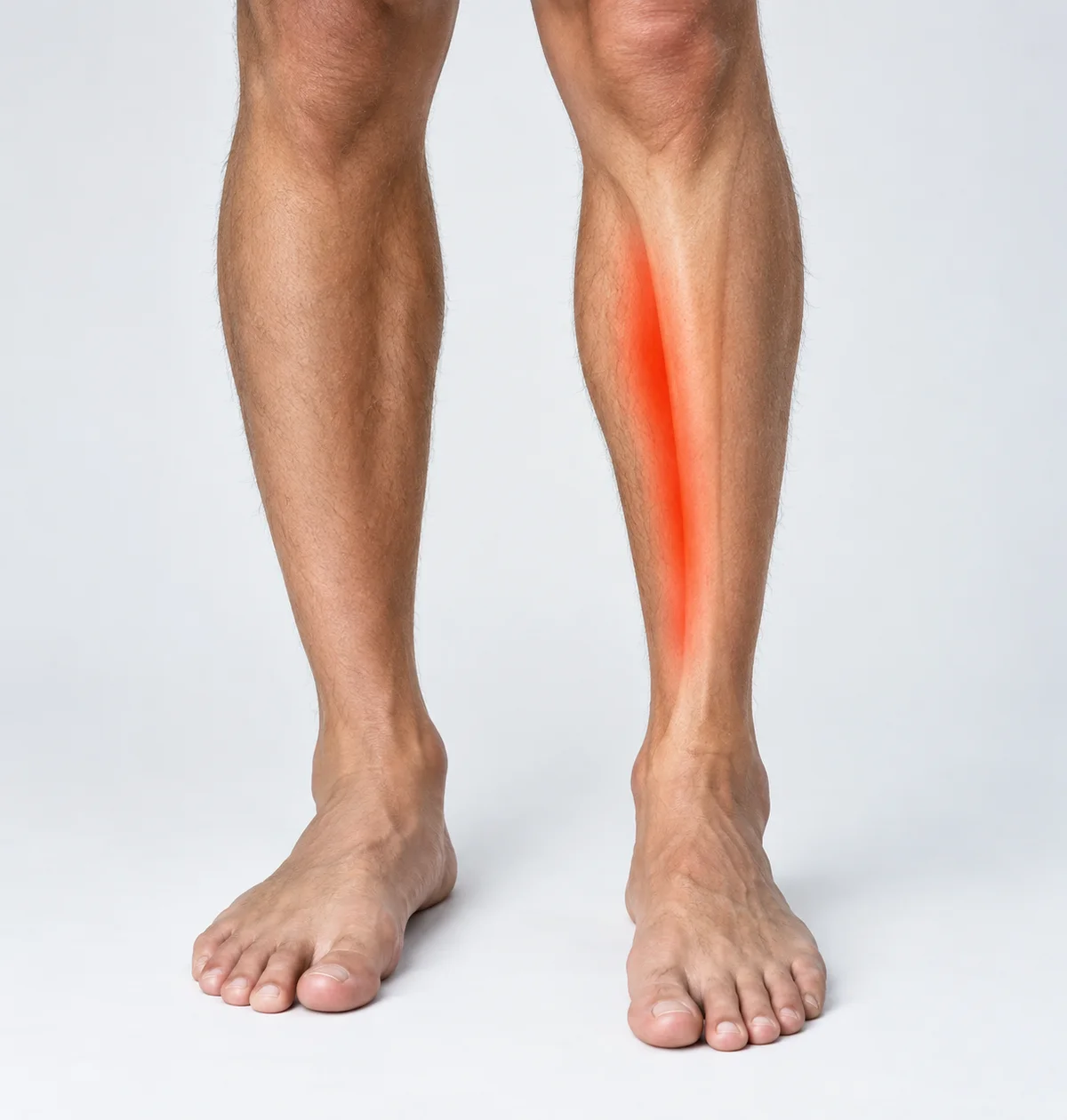
If you have started running again after a long break and noticed an aching pain along your shin, you are not alone. Shin pain is a common complaint among runners and people who suddenly increase their physical activity.
It may begin as a mild discomfort during a run and disappear once you stop. Over time, however, the pain can return sooner, become more noticeable during exercise or start affecting everyday activities such as walking and climbing stairs.
This is often described as shin splints. The term is commonly used for pain around the shin, particularly along the inner part of the lower leg. However, shin splints are not a diagnosis by themselves. Different problems can cause pain in this area, which is why understanding how the symptoms started and how they behave is important.
For runners looking for information about shin splints in Singapore, this distinction matters. The right approach is not simply to treat the painful area, but to understand why the pain developed in the first place.
What Are Shin Splints?
Shin splints is a general term used to describe pain around the front or inner part of the lower leg. Medial tibial stress syndrome, often abbreviated as MTSS, is one condition associated with this type of shin pain.
The tibia is the large bone running between your knee and ankle. Muscles, tendons and other tissues around the lower leg help control movement and absorb forces when you walk, run or jump.
When the lower leg is exposed to more physical stress than it is currently prepared to handle, symptoms can develop. This is particularly common when someone suddenly increases running distance, frequency or intensity.
SingHealth notes that shin splints can involve pain along the inside of the shin that may settle with rest and return when running starts again. It also highlights that the term describes symptoms rather than representing one single diagnosis.
Where Do Shin Splints Hurt?
The location of shin pain can vary from person to person.
A common pattern is discomfort along the inner edge of the shin, particularly over the lower part of the tibia. Some people describe it as an aching or tender feeling rather than a sudden sharp pain.
You may notice the discomfort:
• During or after running
• After increasing your training
• When walking after exercise
• When pressing along the painful area
• At the beginning of a run and then again later as the activity continues
Some people initially notice that the pain settles after stopping exercise. This can make it tempting to continue training without addressing the underlying problem.
However, pain that repeatedly returns when you run is worth paying attention to rather than simply running through it.
Why Do Shin Splints Happen?
There is rarely one simple explanation for shin pain.
Your lower legs have to absorb and manage repeated forces every time your foot strikes the ground. Running, jumping and other high impact activities place considerably more demand on the tissues of the lower leg than normal walking.
Problems can develop when that workload increases faster than your body can adapt.
Suddenly Increasing Running
One of the common situations is returning to running after a period of inactivity.
For example, someone may go from very little exercise to running three or four times a week because they want to improve their fitness or prepare for an upcoming race.
The cardiovascular system may feel capable of handling the workout, but the muscles, tendons and bones of the lower limb also need time to adapt to the repeated loading.
Increasing Distance Too Quickly
Adding several kilometres to your weekly running volume can substantially increase the amount of work your lower legs have to handle.
The same can happen when a recreational runner suddenly starts preparing for a longer race without gradually building their training load.
Increasing Running Speed or Intensity
Speed sessions, intervals, hill running and other higher intensity workouts can place additional demands on the lower limb.
If these are introduced too quickly, the change in workload may contribute to symptoms.
Returning to Sport After a Break
Shin pain is not limited to dedicated runners.
Football, basketball, badminton, tennis, dance, athletics and other activities involving repeated running or jumping can place significant stress on the lower legs.
Someone returning to sport after several weeks or months away may therefore experience shin discomfort even if they were previously able to perform the same activity without problems.
Running Technique and Movement Factors
The way you move can also influence how forces are distributed through your lower limbs.
Foot movement, ankle mobility, calf strength, hip control and overall running mechanics may all be relevant when a clinician is trying to understand why shin pain has developed.
This does not mean that there is one perfect running technique or that a particular foot shape automatically causes shin splints. Instead, these factors are considered as part of the overall assessment.
What Are the Symptoms of Shin Splints?
Shin splints symptoms can vary depending on the individual and the underlying cause of the pain.
Common symptoms can include:
• Aching or tenderness along the inner shin
• Pain that develops during running or other exercise
• Pain that becomes more noticeable as activity continues
• Tenderness when touching the affected area
• Discomfort that improves after resting but returns when activity is resumed
• Lower leg discomfort after a sudden increase in training
The symptoms may initially be mild. This is one reason people sometimes ignore them.
A runner might notice a little shin discomfort during the first few minutes of a run, finish the session and feel relatively normal afterwards. If the same pattern keeps happening, however, the body may be signalling that the current training load needs to be reconsidered.
Can You Run With Shin Splints?
This is one of the most common questions runners ask.
The answer depends on the severity of the symptoms and, importantly, what is actually causing the shin pain.
If running consistently brings the pain back, continuing with the same training volume and intensity is unlikely to give the irritated tissues enough opportunity to settle.
HealthHub notes that stopping running can improve symptoms, although pain may return when running is restarted. It also recommends seeking professional assessment when someone wants to continue activity while dealing with shin pain.
Instead of thinking only about whether you can tolerate the pain, it is more useful to consider why the pain appeared and whether your current training load is appropriate.
Shin Splints After Running: Why Does My Shin Hurt?
If your shins hurt after running, shin splints may be one possibility, but it should not automatically be assumed to be the cause.
Shin pain can have several different explanations, including bone stress injuries and other lower leg conditions. The location of the pain, how quickly it developed, whether it occurs during or after exercise and whether you can comfortably walk or bear weight can all provide useful information.
For example, a broad area of aching along the inner shin that develops with increased running may present differently from severe, very localised pain in one specific area.
That is why persistent or unusual shin pain should not simply be labelled as shin splints without an appropriate assessment.
Shin Splints vs Other Causes of Shin Pain
The phrase “shin splints” is often used for almost any pain around the shin. This can sometimes make it difficult to know what is actually happening.
Other conditions can also cause lower leg pain, including stress reactions or stress fractures and exertional compartment problems.
Some symptoms deserve particular attention, especially pain that is severe, progressively worsening, highly localised, associated with significant swelling, or affecting your ability to bear weight.
If your pain is not improving with appropriate activity modification or is interfering with normal movement, getting assessed can help determine whether you are dealing with a straightforward overuse problem or something that requires a different approach.
Why Early Attention Matters
Shin pain does not always mean that you need to stop being active completely.
The important part is understanding what your body is currently able to tolerate and adjusting the activity accordingly.
HealthHub recommends modifying activities that aggravate acute pain, gradually returning to normal activities and seeking medical advice when pain persists or is accompanied by symptoms such as swelling, weakness, numbness or sudden loss of function.
For runners, this may mean temporarily reducing running volume, changing the type of training or using lower impact exercise while the problem is assessed.
The goal is not simply to make the pain disappear for a few days. It is to understand why the symptoms developed and gradually build your capacity so that your lower legs can handle your desired level of activity again.
When Should You Get Your Shin Pain Assessed?
Consider getting professional advice if:
• Your shin pain keeps returning every time you run
• The pain is getting progressively worse
• You have significant swelling
• Walking or normal daily activities become painful
• You have very localised or severe pain
• You cannot comfortably put weight through the affected leg
• Symptoms do not improve despite reducing aggravating activities
• You are unsure whether the problem is shin splints or another condition
A physiotherapist or sports medicine professional can assess your symptoms, training history, strength, mobility and movement patterns to determine what may be contributing to the problem.
This is particularly useful for runners who want to return to training rather than simply stop exercising indefinitely.
What Happens Next?
Managing shin splints is not just about resting until the pain disappears.
Once the symptoms have settled, the next step is understanding how much activity your lower legs can currently tolerate and gradually rebuilding strength and capacity.
This can involve modifying your running programme, addressing relevant strength or mobility limitations and progressively returning to impact activities.
If shin pain has started affecting your running, the first step is not to push through it and hope it settles on its own. The right approach depends on how severe the symptoms are, what triggered them and how your lower leg responds when activity is reduced.
For many runners, shin pain develops after a sudden change in training. This could be running more kilometres, adding hills or speed sessions, returning to exercise after a break or simply doing more activity than the body has been prepared to handle.
The good news is that many cases can be managed with the right combination of activity modification, progressive strengthening and a gradual return to impact activity.
What Should You Do When Shin Pain Starts?
When shin pain first appears, the most useful step is to identify which activities are making it worse.
If running consistently increases your symptoms, temporarily reducing or stopping the aggravating activity can give the irritated tissues an opportunity to settle.
This does not necessarily mean complete bed rest.
You can often remain active with exercises that do not reproduce your shin pain. Depending on your symptoms, this may include activities such as swimming, cycling or upper body training.
The important point is to avoid replacing running with another activity that places the same amount of stress on the painful area.
If walking itself is painful, however, it is sensible to reduce your activity further and consider getting assessed.
Should You Stop Running If You Have Shin Splints?
There is no single answer that applies to every runner.
If your pain appears during every run, becomes progressively worse or changes the way you walk or run, continuing with the same training programme is not a good way to test whether your leg can tolerate the load.
Instead, your running volume and intensity may need to be reduced temporarily.
A useful way to think about this is to separate fitness from tissue capacity. You may feel cardiovascularly fit enough to run several kilometres, but your bones, muscles and connective tissues may not yet be ready for that amount of repeated impact.
This is particularly common when returning to running after a long break.
Once symptoms have settled and the underlying factors have been addressed, running can usually be reintroduced gradually rather than returning immediately to your previous distance or pace.
How Long Do Shin Splints Take to Heal?
Recovery time varies considerably between individuals.
A mild episode that is identified early may settle relatively quickly after reducing the activity that caused the irritation. More persistent symptoms can take longer, particularly if the training load continues to exceed the body's current capacity.
There is therefore no reliable recovery period that applies to everyone.
Factors that can influence recovery include:
• How long you have had symptoms
• The severity of your pain
• Your current running volume
• Whether you continue aggravating activities
• Previous injuries
• Strength and conditioning
• Running and movement patterns
• How gradually you return to impact activity
Trying to rush the process because the pain has temporarily improved can sometimes result in the symptoms returning.
Can Physiotherapy Help With Shin Splints?
Physiotherapy can be useful when shin pain is affecting your ability to run, exercise or participate in sport.
The purpose of physiotherapy is not simply to treat the painful area. A proper assessment looks at the bigger picture.
Your physiotherapist may ask about:
• When the pain started
• Changes in your running or exercise routine
• Training distance and frequency
• Previous injuries
• Your footwear and running environment
• Pain during walking or running
• Strength and mobility around the ankle, knee and hip
• Your ability to tolerate single leg and impact activities
The assessment can help identify factors that may be contributing to the problem and guide the rehabilitation programme.
NIH also includes sports physiotherapy as part of the management of shin splints, with treatment approaches that can include stretching, strengthening, taping and addressing relevant biomechanical factors.
Exercises for Shin Splints
Exercises should be selected according to your symptoms, strength and stage of recovery.
There is no single exercise that fixes every case of shin pain. A good rehabilitation programme generally aims to improve the ability of the lower limb to handle progressively greater loads.
Calf Strengthening
The calf muscles play an important role in absorbing and producing force during walking and running.
Calf raises can be used to progressively strengthen the calf complex.
Start with a comfortable range of movement and controlled repetitions. As your strength improves, the exercise can be progressed from two legs to one leg and eventually to more demanding variations.
The exercise should challenge the muscles without causing a significant increase in your shin symptoms.
Soleus Strengthening
The soleus muscle works extensively during running and other weight bearing activities.
Bent knee calf raises can place greater emphasis on the soleus and can be useful as part of a progressive lower leg strengthening programme.
The amount of resistance and number of repetitions should be increased gradually rather than all at once.
Single Leg Strength and Control
Running is a single leg activity, so rehabilitation should eventually include exercises that challenge your ability to control your body on one leg.
Exercises such as single leg squats, step ups and controlled lunges can help develop strength and coordination through the lower limb.
These exercises can also provide useful information about how your knee, ankle and hip work together.
Balance and Lower Limb Control
Balance exercises can be incorporated when appropriate.
Single leg balance may look simple, but it challenges the foot, ankle and lower limb to control your body weight.
As your capacity improves, the exercise can be progressed by changing the surface, adding movement or introducing more sport specific challenges.
Does Stretching Help Shin Splints?
Stretching can be useful for some people, particularly when there are relevant restrictions around the calf and ankle.
However, stretching should not be treated as the complete solution.
If your shin pain developed because your training load increased too quickly, stretching alone does not address the underlying issue.
A rehabilitation programme usually needs to consider both mobility and strength, alongside the amount and type of activity you are performing.
If stretching increases your pain, it should be modified rather than forced.
What About Massage for Shin Splints?
Massage may provide temporary relief for some people when muscle tightness is contributing to discomfort.
However, massage does not automatically address the reason the pain developed.
If you continue increasing your running load beyond what your lower legs can currently tolerate, short term relief from massage is unlikely to solve the underlying problem.
This is why hands on treatment, when appropriate, is generally more useful when combined with exercise, load management and a progressive return to activity.
Do You Need to Change Your Running Training?
In many cases, adjusting training is an important part of recovery.
You may need to temporarily reduce one or more of the following:
• Running distance
• Running frequency
• Running speed
• Hill sessions
• Jumping and plyometric training
• Consecutive training days
This does not mean that every runner needs to follow the same reduction.
Your training history and symptoms should guide the changes.
For example, someone who developed pain after suddenly increasing their weekly distance may need a different approach from someone who developed symptoms after adding several high intensity sessions.
The goal is to find a level of activity that your body can tolerate and then gradually build from there.
What About Running Shoes?
Footwear is often discussed when someone develops shin pain, but there is no single shoe that can prevent shin splints for everyone.
Shoes that are excessively worn or unsuitable for your activity may be worth reviewing, particularly if you have recently changed your running environment or training routine.
However, changing shoes should not replace a proper assessment of training load, strength and movement.
If you have recently changed your shoes and developed pain, it is also useful to consider whether the change in footwear happened at the same time as a significant change in your running volume or intensity.
When Is Shin Pain a Reason to See a Physiotherapist?
You should consider an assessment if your symptoms keep returning despite reducing your running or if the pain is affecting your normal activities.
An assessment becomes particularly important when:
• You have persistent pain that is not improving
• Pain is becoming progressively worse
• You have severe or very localised pain
• Walking is painful
• You cannot comfortably put weight through the leg
• There is noticeable swelling
• You experience numbness or weakness
• You are unsure whether the problem is shin splints or another condition
A physiotherapist can help determine whether your symptoms are appropriate for rehabilitation or whether further medical assessment may be required.
This is especially important because not every case of shin pain is caused by shin splints.
Returning to Exercise After Shin Splints
One of the biggest mistakes runners make is returning to their previous training level as soon as the pain improves.
Pain reduction is an important step, but it does not necessarily mean that your lower leg has regained its previous capacity.
A better approach is to gradually reintroduce impact.
You may begin with lower intensity activity and progressively increase running duration, frequency or intensity while monitoring how your symptoms respond.
If pain returns and continues to increase, that is useful information. It may mean that the progression was too fast or that another factor still needs to be addressed.
The aim is to build enough capacity to tolerate your desired level of running rather than simply waiting for the pain to disappear.
Shin Splints Treatment
For runners in Singapore, managing shin pain can be particularly important because training often takes place outdoors in warm and humid conditions.
Whether you run around East Coast Park, train at a gym in Katong, exercise around Bedok or prepare for a race elsewhere in Singapore, your rehabilitation should reflect your actual activity and goals.
At ACE Physio Sports, a sports physiotherapy approach can focus on understanding the reason behind your symptoms, improving strength and movement capacity, managing training load and progressively preparing you to return to running.
The objective is not simply to get you through today's run. It is to help your lower limbs become better prepared for the demands you want to place on them.
What Comes After Shin Splints Treatment?
Once your pain has settled and your lower limb strength has improved, the next stage is returning to your normal activities without immediately repeating the training pattern that caused the problem.
This means progressing running gradually, allowing adequate recovery between demanding sessions and paying attention to how your body responds to increases in workload.
Recovering from shin splints is not just about waiting until the pain disappears. The real goal is to gradually rebuild your lower leg's ability to handle running and other impact activities without repeatedly triggering the same symptoms.
For runners, this means looking beyond the painful shin and considering training load, strength, recovery, running habits and the factors that may have contributed to the problem in the first place.
How to Return to Running After Shin Splints
Returning to running too quickly is one of the most common reasons shin pain can come back.
Even if you feel comfortable walking and your everyday activities are pain free, your body may not yet be ready for your previous running distance or intensity.
A gradual return gives your lower legs time to adapt to the repeated impact of running.
Start With a Manageable Amount
Your first running session should be easier than your previous normal training.
This could mean reducing the distance, slowing your pace or using short running intervals separated by periods of walking.
The exact starting point depends on how long you have been away from running and how your symptoms have responded during rehabilitation.
Monitor Your Symptoms
Pay attention to how your shin feels during the activity and afterwards.
A small amount of awareness does not necessarily mean that you have caused damage, but pain that progressively increases during a session or remains significantly worse afterwards is a reason to reconsider the workload.
Your response over the following day can also provide useful information.
If your symptoms repeatedly flare after each running session, your progression may be too fast.
Increase One Variable at a Time
Avoid increasing distance, speed, hills and training frequency simultaneously.
For example, if you have successfully returned to a comfortable running distance, it may be more sensible to build consistency before introducing faster intervals or substantial hill work.
This makes it easier to understand how your body is responding to each change.
How Can You Prevent Shin Splints From Coming Back?
There is no way to guarantee that shin splints will never return, particularly if you participate regularly in running or high impact sports.
However, several practical habits can help you manage your training load and improve your ability to tolerate exercise.
Increase Training Gradually
Sudden changes in training can place more stress on the lower limbs than they are prepared to handle.
When increasing your running, consider changes in distance, frequency, speed and terrain rather than looking only at the number of kilometres completed.
A gradual progression gives your body more time to adapt.
Avoid Doing Every Run at High Intensity
Not every training session needs to be hard.
If every run includes fast intervals, hills or a high volume of work, your lower legs may have less opportunity to recover between sessions.
A balanced programme can include easier sessions alongside more demanding workouts.
Build Lower Limb Strength
Strength training can help improve your ability to handle the demands of running.
Calf raises, soleus strengthening, single leg exercises, step ups and other lower limb movements can be incorporated according to your individual needs.
The exercises should become progressively more challenging as your strength improves.
Give Your Body Time to Recover
Recovery is part of training, not time wasted between workouts.
Sleep, rest days and sensible spacing between demanding sessions can all help you manage the total stress placed on your body.
If your legs consistently feel heavy or painful between runs, that may be a sign that your current training schedule needs adjustment.
Do Not Ignore Repeated Pain
Occasional muscle soreness after a demanding workout is different from pain that repeatedly appears in the same area whenever you run.
If the same shin pain keeps returning, it is worth investigating rather than repeatedly stopping and restarting your training without understanding the reason.
Shin Splints When Running in Singapore
Singapore offers plenty of opportunities for outdoor running, from East Coast Park and the Katong area to routes around Bedok, Marine Parade and other parts of the island.
The environment can also influence how a training session feels.
Warm and humid conditions can make running more demanding, particularly when combined with longer distances or high intensity sessions.
If you are preparing for a race or increasing your weekly mileage, consider the overall training load rather than focusing only on individual runs.
Your hydration, recovery, sleep, training intensity and rest between sessions all form part of the bigger picture.
A Representative Example of Shin Splints Recovery
Consider a recreational runner who stopped exercising for several months and then decided to prepare for a 10 kilometre event.
They began running three times a week and increased their distance quickly because the first few sessions felt manageable.
After several weeks, they started noticing an aching sensation along the inner part of one shin. The pain initially disappeared after running but gradually started appearing earlier during each session.
Instead of continuing with the same programme, they reduced their running and had their lower limb assessed.
The rehabilitation focused on improving calf and lower limb strength, gradually rebuilding tolerance to impact and adjusting the running programme.
Once they could comfortably manage the required strength and activity levels, running was gradually reintroduced.
The important part of this example is not a particular exercise or recovery timeline. It is the process of identifying the problem, modifying the workload and rebuilding capacity before returning to the previous training level.
When Shin Pain Is Not Something to Run Through
It can be tempting to treat shin pain as something that every runner simply has to tolerate.
That approach can be problematic when the symptoms are persistent, severe or different from what you normally experience.
Seek professional assessment if you have severe pain, highly localised tenderness, significant swelling, difficulty bearing weight, numbness, weakness or symptoms that continue despite reducing aggravating activity.
These signs do not automatically mean that you have a serious injury, but they warrant appropriate assessment rather than assuming that the problem is ordinary shin splints.
How Physiotherapy Can Support Your Return to Running
A sports physiotherapy programme can be adapted around your current ability and your eventual activity goals.
Depending on the assessment, treatment may include:
• Managing your current training load
• Improving calf and lower limb strength
• Addressing relevant mobility limitations
• Working on single leg control and balance
• Progressively introducing impact exercises
• Reviewing running related factors
• Developing a gradual return to running programme
• Helping you understand how to manage future increases in training
The exact programme should depend on the individual rather than following a fixed list of exercises.
Someone who runs recreationally twice a week may need a different rehabilitation strategy from a marathon runner, football player or competitive athlete.
Shin Splints Physiotherapy in Singapore
At ACE Physio Sports, the focus is on understanding the factors contributing to your shin pain rather than simply treating the painful area.
For runners and active individuals in Katong, Marine Parade, Bedok, Tampines and the wider East Coast area, physiotherapy can be tailored around your sport, training routine and recovery goals.
The aim is to help you understand your injury, rebuild strength and capacity and return to the activities you enjoy with a more sustainable approach to training.
If shin pain keeps returning whenever you run, getting assessed can help you understand whether you are dealing with shin splints or another cause of lower leg pain.
A Patient Story: Returning to Running After Shin Pain
Consider a recreational runner who came to ACE Physio Sports after developing recurring shin pain while preparing for a 10 kilometre run.
They had recently increased their running frequency and distance after a period of reduced activity. Initially, the discomfort appeared only towards the end of a run and settled after resting. Over the following weeks, however, the pain started appearing earlier and began affecting their confidence during training.
During the physiotherapy assessment, the focus was not only on the painful area. The training history, lower limb strength, movement control and ability to tolerate running loads were also considered.
Rather than immediately returning to the previous running schedule, the runner temporarily reduced the activities that were aggravating the symptoms. Their rehabilitation included progressive calf and lower limb strengthening, single leg control exercises and a gradual increase in load.
As their strength and tolerance improved, running was reintroduced progressively. Distance and intensity were increased in stages rather than returning straight to the previous training volume.
The goal was not simply to make the shin pain disappear. It was to help the runner understand what had contributed to the problem, rebuild their capacity and return to running in a more sustainable way.
This is a representative example of how a shin splints rehabilitation journey may be approached at ACE Physio Sports. It is not a description of a specific patient's case or outcome.