
After the Singapore Marathon: 7 Signs Your Running Pain Needs More Than Rest

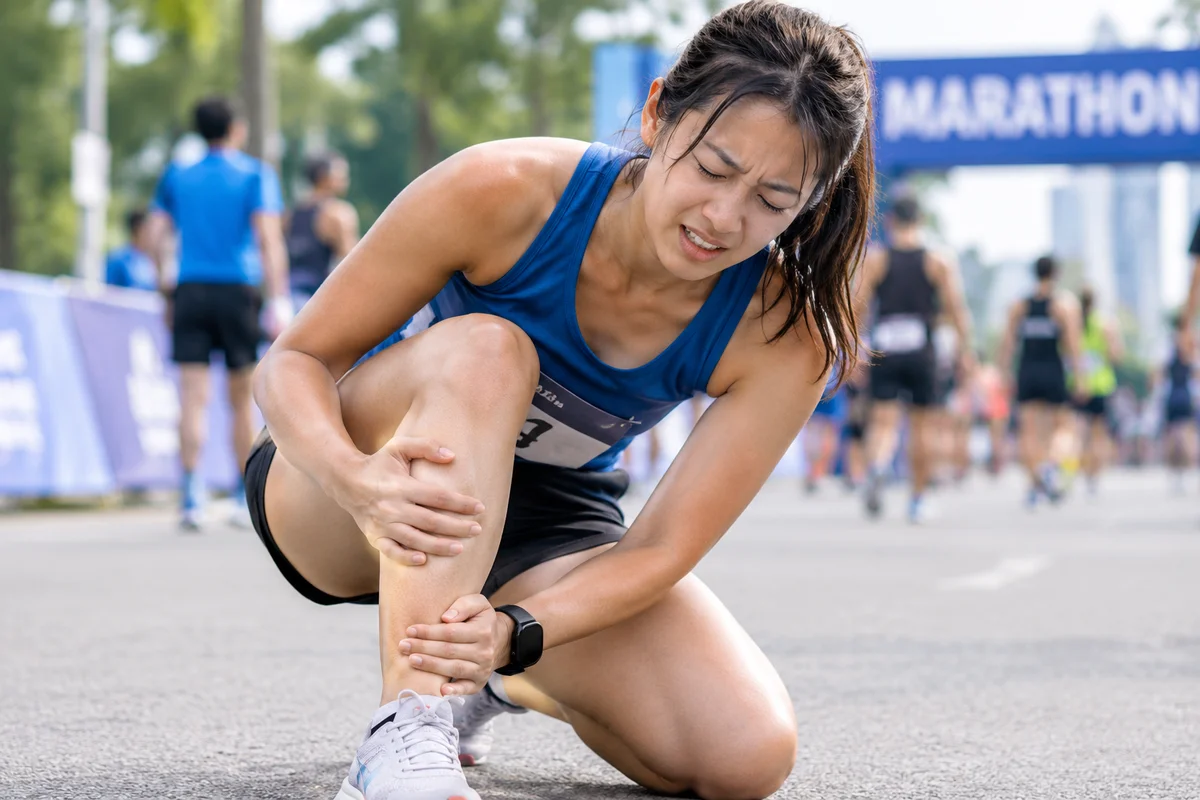
Crossing the finish line of a marathon is a memorable achievement. Months of training, early morning runs, long weekends and careful preparation finally come together on race day.
But for some runners, the experience does not end at the finish line.
The following morning, getting out of bed feels difficult. Your thighs are sore, your calves feel tight and walking down the stairs is not as comfortable as usual. You might also notice discomfort around your knees, ankles or feet.
Some soreness after running 21.1 km or 42.195 km is expected, particularly if you have completed a distance that is longer or more demanding than your usual training sessions.
However, there is a difference between muscles recovering from a demanding effort and symptoms that could indicate an injury.
With the 2026 BYD Singapore International Marathon taking place from 4 to 6 December, many runners will be thinking about their recovery after race weekend.
If you are still experiencing pain after the Singapore Marathon, here is what you should understand before returning to your regular running routine.
Why Does Your Body Hurt After a Marathon?
A marathon places considerable physical demands on your body.
Every running step involves repeated loading through your feet, ankles, knees and hips. Over a distance of 42.195 km, your muscles and connective tissues experience thousands of repeated movements.
Even experienced runners can feel the effects of this workload.
Some common reasons for discomfort after a marathon include:
Muscle fatigue
Your quadriceps, hamstrings, calves and gluteal muscles work continuously during a long-distance run. As fatigue builds, these muscles may become sore and feel difficult to use normally.
Delayed onset muscle soreness
Often called DOMS, this is the muscle soreness that develops after unfamiliar or strenuous exercise. It may not be noticeable immediately after finishing the race. Instead, it commonly becomes more apparent over the following day or two.
Increased loading on joints and tendons
Long-distance running places repeated demands on structures such as the knee joint, Achilles tendon and tissues around the foot. If the workload exceeds what your body is accustomed to handling, discomfort may develop.
Changes in running mechanics due to fatigue
As you become tired, your stride, posture and movement patterns may change. You might shorten your steps, alter your foot placement or find it harder to maintain your usual running rhythm.
These changes do not automatically mean you have injured yourself. However, they can be relevant when assessing persistent discomfort after a race.
Normal Muscle Soreness or a Running Injury?
This is one of the most common questions runners have after completing a long-distance event.
You may experience stiffness when getting out of bed, discomfort while climbing stairs or tenderness when pressing certain muscles. These symptoms can occur during normal post-exercise recovery.
However, not all post-marathon pain should be dismissed as muscle soreness.
What Normal Post-Run Soreness May Feel Like
DOMS commonly develops after strenuous or unfamiliar exercise.
You may notice:
- General soreness in the muscles used during the race.
- Stiffness when walking or using stairs.
- Tenderness when pressing the affected muscles.
- Discomfort that develops several hours after finishing.
- Symptoms that gradually improve over the following days.
For many people, muscle soreness is most noticeable during the first 24 to 48 hours and gradually settles.
The important thing is the overall trend. You should generally notice improvement rather than progressively worsening symptoms.
Signs That Could Suggest an Injury
A running injury may produce symptoms that are more localised or affect how you move.
Pay attention if you experience:
- Sharp or clearly localised pain.
- Swelling around a joint or tendon.
- Pain that makes you limp.
- Difficulty putting weight through one leg.
- A feeling of instability around the knee or ankle.
- Pain that becomes worse rather than gradually improving.
- Discomfort that returns whenever you attempt to run.
These symptoms do not identify a specific injury on their own. They are reasons to stop assuming that everything is normal post-race soreness and seek an appropriate assessment.
7 Signs Your Running Pain Needs More Than Rest
Not every runner needs physiotherapy after completing a marathon. However, certain symptoms deserve more attention, particularly when they affect normal movement or continue to interfere with everyday activities.
1. Knee Pain That Does Not Settle
Knee discomfort is a common concern among recreational runners.
After a marathon, you might notice pain around the front of the knee, around the kneecap or along the inner or outer part of the joint.
Some runners experience discomfort when:
- Walking downstairs.
- Getting up from a chair.
- Squatting.
- Bending the knee.
- Attempting to run again.
The cause can vary. It may involve the structures around the kneecap, tendons, joint tissues or other factors that require individual assessment.
If your knee remains painful, becomes swollen or makes walking difficult after the race, do not assume that additional rest alone will solve the problem.
2. Calf Pain That Makes Walking Uncomfortable
Your calf muscles work hard throughout a long-distance race.
Afterward, you may experience general tightness or soreness in both calves. This can occur during normal recovery, particularly after an unfamiliar increase in running distance.
However, a sudden pulling sensation during the race, localised tenderness, bruising or significant pain when pushing off the ground could indicate a calf injury.
Be particularly careful if the discomfort affects ordinary walking or becomes worse when you try to climb stairs.
Sudden calf swelling, warmth or redness, particularly when affecting one leg, needs prompt medical assessment because not all calf pain is caused by a muscle problem.
3. Achilles Tendon Pain or Morning Stiffness
The Achilles tendon connects your calf muscles to your heel and plays an important role in walking, running and pushing off the ground.
After a demanding race, some runners notice discomfort around the back of the ankle.
You might experience:
- Stiffness around the Achilles tendon when getting out of bed.
- Discomfort during the first few steps in the morning.
- Tenderness when pressing the tendon.
- Pain when walking uphill or pushing off.
- Discomfort when attempting to run.
Persistent Achilles tendon pain deserves attention, particularly if it returns whenever you increase your activity.
Avoid repeatedly testing the tendon with intense running or jumping while it remains painful.
4. Ankle Pain or Swelling After the Race
Ankle discomfort can develop following repeated loading during a long-distance run.
Some runners notice stiffness around the ankle, while others experience swelling or pain on the inner or outer side.
Consider getting an assessment if:
- Your ankle remains noticeably swollen.
- You have difficulty walking normally.
- The joint feels unstable.
- You experience pain when pushing off.
- The discomfort is not improving.
Significant swelling, severe pain or an inability to bear weight should not be treated as ordinary post-marathon soreness.
5. Foot or Heel Pain That Changes the Way You Walk
Your feet absorb repeated loading throughout a marathon.
After the race, you might experience discomfort around the heel, arch, ball of the foot or toes.
Some runners notice pain during their first steps in the morning. Others experience discomfort when standing for longer periods or walking barefoot.
Foot pain should not be ignored if it is localised, persistent or affecting your walking pattern.
Pain in a specific area of the foot, particularly with swelling or difficulty bearing weight, may require medical assessment to rule out a more significant injury.
6. Pain That Keeps Returning When You Start Running Again
You may feel considerably better after two or three days of rest.
However, when you attempt an easy run, the same knee, calf or Achilles discomfort returns.
This is worth paying attention to.
Feeling comfortable while resting does not necessarily mean that the affected tissues are ready to tolerate running again.
Running involves repeated impact and loading. Your body may need more time to rebuild strength and tolerate that activity.
If the same symptoms repeatedly return when you resume running, consider getting assessed rather than repeatedly stopping and restarting without understanding the problem.
7. Pain That Affects Everyday Activities
Perhaps the biggest warning sign is when your discomfort starts affecting things beyond running.
You might find it difficult to:
- Walk comfortably.
- Climb stairs.
- Stand for extended periods.
- Get out of a chair.
- Carry out your usual daily activities.
A marathon is physically demanding, but it should not be necessary to push through significant pain during everyday movement.
If your symptoms are interfering with normal activities, seek an appropriate medical or physiotherapy assessment.
When Should You Seek Medical Attention?
Some post-race discomfort can be managed with appropriate recovery and a gradual return to activity. However, certain symptoms need prompt medical attention.
Seek medical assessment if you experience severe or worsening pain, significant swelling, an inability to bear weight, numbness, or an obvious change in the shape of a joint or limb.
Chest pain, fainting, unusual breathlessness or confusion after an endurance event require emergency medical attention.
Also, unusually severe muscle pain or weakness accompanied by dark or cola-coloured urine after a marathon can indicate a serious condition called rhabdomyolysis. This requires urgent medical assessment.
Do not assume that every symptom after an endurance race is simply a result of pushing yourself too hard.
Why You Should Not Rush Back Into Running
One of the most common mistakes runners make is returning to their usual training schedule as soon as the soreness becomes manageable.
You may have taken several days off and feel ready to start running again. However, the physical demands of a marathon can leave you with fatigue and reduced tolerance for additional training.
Returning too quickly may aggravate an existing problem or make it harder to identify why the pain keeps coming back.
Your recovery should depend on how you feel, whether your everyday movement has returned to normal and whether you can gradually tolerate running-related activities.
What Should You Do in the First Few Days After the Singapore Marathon?
Finishing a marathon is a major physical achievement. But crossing the finish line does not mean your body has completed its work. Your muscles, tendons and joints have been exposed to hours of repeated loading, and they need time to recover.
The first few days after the race are not the time to test your fitness or prove that you can get back to training quickly. Give your body room to recover, pay attention to how you feel and avoid pushing through pain just to maintain your running routine.
Here are a few practical ways to approach recovery.
1. Give Your Legs Time to Recover
It is common to experience muscle soreness, stiffness and tiredness after running a marathon. These symptoms may become more noticeable the day after the race and can take several days to settle.
During this period:
- Reduce or temporarily pause running, particularly if your legs feel heavy or sore.
- Avoid intense workouts, speed sessions, hill training and heavy lower-body strength exercises.
- Do not force deep stretches into painful or very tight muscles.
- Allow yourself enough time to sleep and recover between daily activities.
Complete rest is not always necessary for ordinary muscle soreness. Gentle walking and comfortable everyday movement may help you feel less stiff. However, if walking itself is painful, you are limping or you have noticeable swelling, do not treat it as routine post-marathon soreness.
The aim is to stay comfortably mobile without adding more stress to an area that may already be irritated.
2. Stay Hydrated and Eat Properly
A marathon places considerable demands on your energy stores and fluid balance. Replacing what you have lost is an important part of recovery.
Drink fluids regularly throughout the day, rather than trying to compensate by drinking a very large amount at once. Your fluid needs depend on factors such as how much you sweated, the weather, your body size and your activity level.
Your meals should include a combination of:
- Carbohydrates: Rice, potatoes, oats, bread and fruit help replenish energy stores.
- Protein: Eggs, fish, chicken, tofu, beans and dairy provide nutrients needed for muscle repair.
- Fruits and vegetables: These provide vitamins, minerals and fibre as part of a balanced diet.
- Fluids: Water is suitable for everyday hydration. After prolonged exercise with substantial sweating, an electrolyte-containing drink may also be useful.
You do not need an expensive recovery supplement or a complicated meal plan to support recovery. Consistent meals, adequate fluids and sufficient rest are a sensible starting point.
If you have a medical condition that affects your fluid or dietary requirements, follow the advice of your healthcare professional.
3. Prioritise Sleep
It can be tempting to focus on stretching, massage and recovery products after a marathon. However, sleep is one of the most important parts of allowing your body to recover.
Try to maintain a regular sleep schedule and give yourself enough time to rest. If you feel unusually tired in the days following the race, consider reducing other physically demanding activities as well.
Remember that recovery is not only about how your legs feel. General fatigue, poor concentration and reduced energy can also indicate that you have not fully recovered.
4. Use Gentle Movement, Not Another Workout
Some runners find that gentle movement helps them feel less stiff after a race. This might include a short walk, easy mobility exercises or comfortable movement through the hips, knees and ankles.
Keep the intensity low. You should be able to move without sharp pain, increasing discomfort or a change in the way you walk.
Avoid treating recovery activities as a way to burn more calories or make up for missed training. A recovery walk should feel easy, not like another endurance session.
If a particular movement increases pain around your knee, calf, Achilles tendon, ankle or foot, stop and reassess rather than repeatedly trying to stretch or exercise through it.
When Can You Start Running Again After a Marathon?
There is no single number of rest days that is right for every marathon runner.
Someone who has completed several marathons and finishes without significant discomfort may recover differently from someone running their first marathon. Your training background, race effort, previous injuries, sleep, general health and symptoms all influence how quickly you can return to running.
Instead of relying only on the calendar, look at how your body is responding.
Before attempting an easy run, consider whether you can:
- Walk normally without limping.
- Climb and descend stairs without significant pain.
- Move your knees, ankles and hips comfortably.
- Perform normal daily activities without symptoms getting worse.
- Complete gentle lower-body movements without sharp or increasing pain.
These are useful general checks, not a medical clearance test. Passing them does not rule out an injury.
If you still have localised pain, swelling, unusual stiffness or discomfort that changes your walking pattern, get the problem assessed before returning to running.
A Gradual Return-to-Running Approach
Once everyday movement feels comfortable and there are no concerning symptoms, you can consider returning to running gradually.
A sensible progression might look like this:
Stage 1: Comfortable daily movement
Start with normal walking and everyday activities. There is no need to add running while you are still struggling with basic movement or experiencing significant soreness.
Stage 2: Short, easy activity
If walking is comfortable and your symptoms have settled, try a short period of gentle activity. This could be an easy walk or another low-impact activity that does not aggravate your symptoms.
Stage 3: A short, easy run
When you are comfortable with daily movement and light activity, consider a short, relaxed run. Keep the pace conversational. Avoid intervals, tempo running, long distances and hills at this stage.
Stage 4: Gradually rebuild your running routine
If the short run feels comfortable during the activity and afterwards, you can gradually increase your running time and frequency. Change one aspect of training at a time rather than increasing distance, speed and frequency together.
Pay attention to how you feel later that day and the following morning. Pain that returns, becomes more intense or starts affecting normal movement is a reason to step back and seek advice.
There is no need to rush towards your pre-marathon mileage. Your next training block should be built around your current recovery, not simply the distance you were running before race day.
For more guidance on returning to physical activity safely, Singapore's HealthHub provides advice on how to start slowly and increase exercise gradually.
Why Rushing Back Into Training Can Make Things Worse
After months of preparation, taking time away from running can feel frustrating. You may be worried about losing fitness or falling behind your training plan.
However, returning too quickly can place additional stress on tissues that have not recovered fully.
For example:
- Knee pain may become more noticeable when you return to longer distances or downhill running.
- Calf pain may return when you increase running speed or push off more forcefully.
- Achilles tendon discomfort may become worse with repeated loading, particularly during faster running or hill sessions.
- Foot pain may return when you increase time on your feet before the area is ready.
These symptoms do not automatically mean you have a serious injury. But recurring pain is worth paying attention to, particularly if it is becoming more frequent or affecting your running technique.
A useful approach is to judge your progress by how well you tolerate activity, not simply by how quickly you can return to your previous pace.
What If the Pain Is Still There After Several Days?
Some post-marathon soreness gradually improves as the body recovers. However, pain that remains localised, keeps returning or interferes with normal activities deserves more attention.
You should consider getting assessed if:
- Your knee, ankle, foot, calf or Achilles pain is not improving.
- You continue to limp or avoid putting weight through one leg.
- Swelling remains or increases.
- Pain returns whenever you attempt to run.
- You experience morning stiffness that is persistent or worsening.
- You cannot comfortably return to your usual daily activities.
A physiotherapist can assess your movement, strength, joint mobility and tolerance to loading to help identify what may be contributing to your symptoms.
The important point is not to assume that every post-marathon problem will resolve with more rest. If the symptoms are not following a normal recovery pattern, understanding the cause can help you make a more informed decision about your next steps.
When Should You See a Physiotherapist After a Marathon?
A little muscle soreness after a marathon is expected. However, if knee, calf, ankle, foot or Achilles pain continues to affect your movement, it may be worth getting a professional assessment.
You do not have to wait until the pain becomes severe before seeking help.
A physiotherapist can assess how your body is moving, identify areas of weakness or restricted movement and understand how your symptoms respond to different activities. This can help determine whether you need further medical assessment, a period of modified activity or a structured rehabilitation programme.
At ACE Physio Sports, the aim is not simply to reduce discomfort temporarily. It is to understand what may be contributing to the problem and help you build towards comfortable, confident movement again.
What Happens During a Physiotherapy Assessment?
Every runner has a different training history, running technique and recovery experience. Your assessment should reflect that.
Depending on your symptoms, a physiotherapy assessment may include:
1. Understanding your running history
Your physiotherapist may ask about your marathon preparation, weekly mileage, previous injuries, race-day experience and when the pain started. They may also ask whether you increased your training volume or intensity before the event.
2. Examining the painful area
The assessment may include checking the affected muscles, tendons and joints, along with swelling, tenderness and range of movement. This helps build a clearer picture of what may be contributing to your symptoms.
3. Checking strength and movement
Your physiotherapist may assess leg strength, balance, control and functional movements such as squatting, stepping and single-leg activities. These checks can help identify limitations that may affect your ability to return to running.
4. Understanding your running goals
There is a difference between someone who wants to walk comfortably again and someone preparing for another half-marathon. Your rehabilitation plan should consider your current ability and what you want to return to doing.
If your symptoms suggest a possible injury that requires medical investigation, your physiotherapist may recommend further assessment or referral.
A Runner's Experience: From Post-Marathon Pain to a Gradual Return to Running
Consider this illustrative example of a runner who experiences persistent knee discomfort after completing a marathon.
After months of training, he was delighted to finish the race. However, in the days that followed, he noticed that his knee was still uncomfortable. Walking downstairs became difficult, and whenever he tried to run, the pain returned.
Initially, he assumed it was ordinary post-marathon soreness. He reduced his activity and waited for the discomfort to disappear. But after several days, he was still struggling with certain everyday movements.
He was also concerned about losing the fitness he had built during months of preparation.
How Physiotherapy Could Help
At ACE Physio Sports, a runner presenting with these symptoms would first undergo an individual assessment rather than being given the same recovery exercises as every other runner.
The physiotherapist would look at the runner's symptoms, knee movement, lower-limb strength, balance and tolerance to everyday activities. The assessment would help determine whether the symptoms were consistent with a problem that could be managed through rehabilitation or whether further medical investigation was needed.
Based on the assessment findings, support may include:
- Managing activity levels: Temporarily modifying running and other activities that aggravate the knee, while maintaining comfortable movement.
- Restoring movement: Using appropriate mobility exercises where stiffness or restricted movement is present.
- Building strength: Progressing exercises for the quadriceps, hamstrings, glutes and other relevant muscle groups according to the runner's needs.
- Improving movement control: Working on balance, coordination and single-leg control where these are identified as limitations.
- Planning a return to running: Gradually reintroducing running once the runner can tolerate the required movements and loading.
The programme would be adjusted according to how the knee responds, rather than following a fixed timeline.
The Goal Is More Than Getting Rid of Pain
For a runner, successful recovery is not simply being able to walk without discomfort. It also means rebuilding the strength and confidence needed to return to running without repeatedly aggravating the same problem.
The aim of rehabilitation is to help the runner understand their body's response to activity, manage training loads and progress towards their running goals safely.
This is an illustrative educational scenario, not a verified ACE Physio Sports patient testimonial or a claim of a specific treatment outcome. Actual treatment and recovery depend on the individual's assessment findings and condition.
How Physiotherapy Can Help With Common Post-Marathon Problems
Different symptoms require different approaches. A rehabilitation plan for calf pain, for example, may not be suitable for someone experiencing Achilles tendon discomfort or knee pain.
Here is how physiotherapy may help with some common running-related problems.
Knee Pain After a Marathon
Knee discomfort may be associated with several factors, including changes in training load, muscle capacity, joint irritation or an underlying injury.
Physiotherapy may involve assessing knee movement, lower-limb strength, balance and how the knee responds to activities such as walking, squatting and stepping.
Treatment may include progressive strengthening, movement training and guidance on modifying running activity while symptoms settle.
Learn more about knee Pain & Types of knee pain.
Calf Pain After Running
Calf pain can occur due to muscle overload, a strain or other conditions affecting the lower leg.
A physiotherapist can assess the affected area, check ankle movement and evaluate calf strength and loading tolerance.
Depending on the findings, rehabilitation may progress from comfortable movement to calf strengthening and eventually running-specific exercises.
Sudden severe calf pain, significant swelling or warmth should not automatically be treated as a muscle strain. These symptoms may require prompt medical assessment.
Achilles Tendon Pain
Achilles tendon discomfort may present as stiffness or pain around the back of the ankle, sometimes particularly noticeable during the first few steps in the morning.
Management often involves adjusting aggravating activities and gradually rebuilding the tendon’s ability to tolerate load. A physiotherapist may prescribe progressive calf-strengthening exercises and guide the return to running.
The exercise selection and progression should depend on the individual's symptoms and assessment.
Learn more about Achilles Tendon Pain & Relief
Ankle and Foot Pain
Ankle and foot pain can have several possible causes, including tendon problems, joint irritation, soft-tissue injuries and stress-related bone injuries.
Assessment helps determine whether rehabilitation is appropriate or whether further investigation is needed.
Where suitable, treatment may focus on restoring mobility, improving strength and balance, and gradually increasing the amount of weight and activity the foot can tolerate.
Check how we treat Ankle Pain
Why Returning to Running Should Be Part of Your Rehabilitation Plan
One common mistake runners make is assuming that once their pain reduces, they can immediately return to their previous training distance.
But being comfortable during everyday activities does not necessarily mean your body is ready for the repeated loading involved in running.
A gradual return-to-running plan should consider:
- Whether you can walk and use stairs comfortably.
- Whether the affected leg has regained appropriate strength.
- Whether you can tolerate basic single-leg movements.
- Whether symptoms remain settled after exercise.
- Whether running can be reintroduced without pain progressively worsening.
Your physiotherapist can help you decide when to progress and when to modify activity.
If you are preparing for another race, rehabilitation can also provide an opportunity to review your training habits, strength work and recovery routine.
You can learn more about our sports injury rehabilitation services at ACE Physio Sports.