
Calf Pain After Running: Causes, Treatment & Recovery

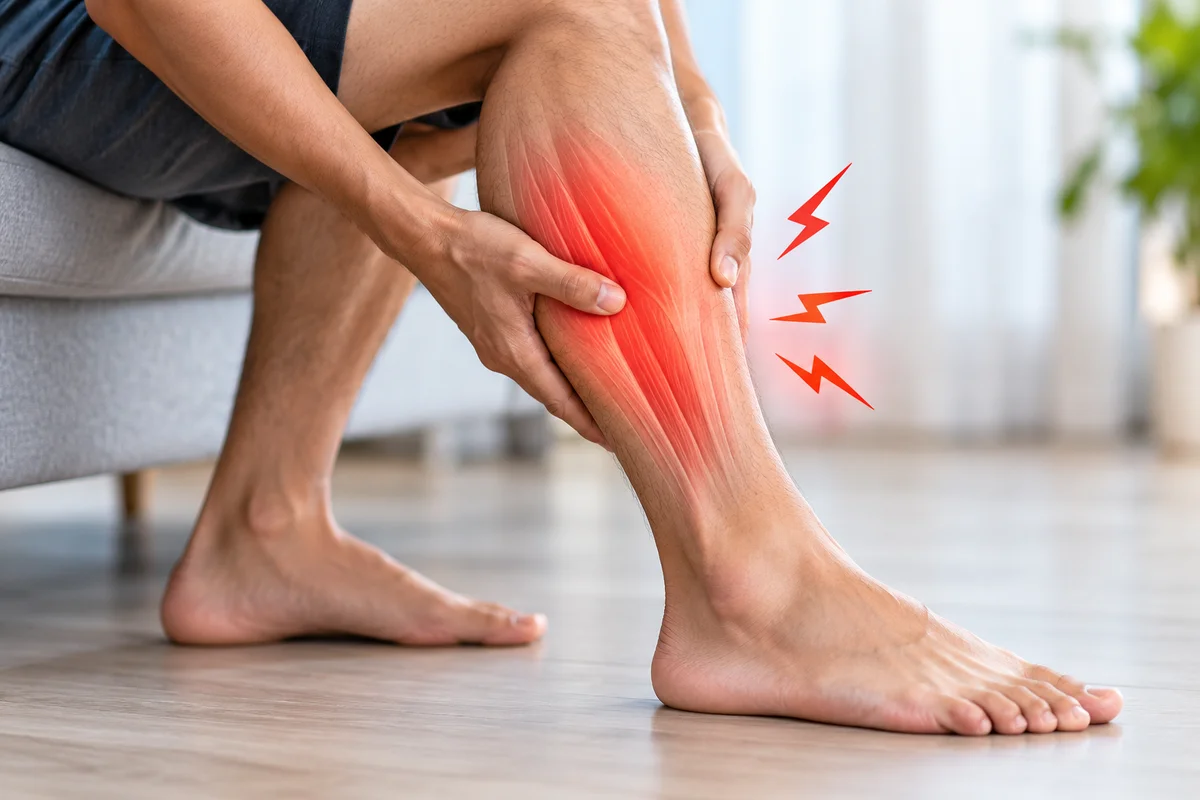
Running is a great way to stay active, but it places repeated demands on the muscles and tendons of your lower legs. If your calf starts hurting during a run or feels sore afterwards, it can be difficult to know whether it is normal post exercise soreness or something that needs more attention.
Calf pain after running can have several causes. It may develop after doing more exercise than usual, increasing your running distance, adding hills or speed work, returning to running after a break, or suddenly changing your training routine.
In some cases, the problem may involve the calf muscles themselves. In others, pain can be related to the Achilles tendon or another condition affecting the lower leg.
Understanding the pattern of your symptoms is therefore an important first step.
Where Is the Calf?
The calf is the muscular area at the back of your lower leg, between the knee and ankle.
The main calf muscles include the gastrocnemius and soleus. Together, they help produce movement at the ankle and play an important role in activities such as walking, running and jumping.
These muscles also work with the Achilles tendon, which connects the calf muscles to the heel bone.
Because the calf and Achilles tendon work together during running, pain in the back of the lower leg does not always mean that the calf muscle itself is injured.
Why Does My Calf Hurt After Running?
There is no single cause of calf pain.
One of the most common situations is simply asking your body to do more than it has recently been accustomed to.
For example, you may have increased your weekly running distance, started running more frequently or introduced hills and faster sessions.
Your cardiovascular fitness may feel good enough to handle the workout, but your muscles and tendons still need time to adapt to the increased physical load.
This is why a runner can sometimes feel fit enough to continue but still develop pain in the lower leg.
Common Causes of Calf Pain After Running
Post Exercise Muscle Soreness
Some calf discomfort after running can be normal, particularly when you have recently started exercising, changed your workout or performed a harder session than usual.
Delayed onset muscle soreness, often called DOMS, can develop after exercise and may become noticeable during the following day or two.
The discomfort is usually more general rather than being concentrated in one very specific spot.
If the soreness gradually improves as you recover, it may simply reflect your muscles adapting to a new training demand.
However, severe pain or soreness that does not settle should not automatically be considered normal exercise soreness.
Calf Muscle Strain
A calf strain occurs when muscle fibres are overstretched or damaged.
It can happen during running, sprinting, jumping or another activity requiring the calf to produce force quickly.
A strain may cause a more sudden pain than ordinary post exercise soreness.
You may notice:
• Sudden pain during running
• A pulling or tearing sensation in the calf
• Localised tenderness
• Pain when walking or pushing off the foot
• Swelling or bruising in more significant injuries
The severity can vary considerably, which is why an assessment can be useful when pain starts suddenly during activity.
Sudden Increase in Running
Increasing your running load too quickly can place additional stress on the muscles and tendons of the lower leg.
This can happen when you:
• Increase your weekly distance
• Start running every day
• Add hill training
• Introduce sprint sessions
• Increase your running pace
• Begin preparing for a race
• Return to running after a long break
The problem is not necessarily that running is harmful. It is often the rate at which the workload has changed compared with what your body has been prepared to handle.
Achilles Tendon Problems
Pain at the back of the lower leg can sometimes be related to the Achilles tendon rather than the calf muscle.
The Achilles tendon connects the calf muscles to the heel and is heavily involved in running and jumping.
Achilles related pain is often felt closer to the heel or lower part of the calf and may be associated with stiffness, particularly when starting activity.
This distinction matters because the management of a tendon problem can differ from the approach used for a simple muscle strain.
Calf Cramps
A calf cramp is different from a muscle strain.
A cramp is usually a sudden, involuntary contraction of the muscle that can cause intense pain. It may last for a short period before the muscle relaxes.
Cramps can have different contributing factors. Muscle fatigue, physical fitness, electrolyte imbalance and other health factors may sometimes be involved.
If cramps happen frequently or without an obvious reason, particularly if they are affecting sleep or normal activities, it is worth discussing them with a healthcare professional.
Returning to Running After a Break
Calf pain is also common when someone returns to running after several weeks or months away from regular exercise.
Even if you previously ran without problems, your current capacity may be different after a period of reduced activity.
Starting again at your previous distance or pace can therefore place a greater demand on the calf than it is currently prepared to handle.
A gradual return allows the muscles and tendons to rebuild their tolerance to running.
What Does Calf Pain Feel Like?
The type and location of pain can provide useful clues, although symptoms alone cannot always determine the exact cause.
Calf pain may feel like:
• A general aching sensation after exercise
• Tightness through the calf
• A sharp pain during running
• A pulling sensation when pushing off
• Tenderness when touching a particular area
• Stiffness when getting up after resting
• Pain that increases when walking or climbing stairs
The timing of the pain is also important.
Pain that develops gradually after a demanding workout may present differently from pain that occurs suddenly during a sprint.
Likewise, pain that repeatedly appears at a particular point during every run may require a different assessment from occasional muscle soreness after an unusually difficult session.
Calf Pain When Running vs Calf Pain After Running
When does your calf hurt?
This simple question can provide useful information.
Calf Pain During Running
Pain that starts while you are running may indicate that the tissues are struggling to tolerate the current workload.
It may be related to a muscle strain, tendon problem, training load or another condition affecting the lower leg.
If the pain gets progressively worse as you continue running, it is sensible to stop and assess what is happening rather than repeatedly pushing through it.
Calf Pain After Running
Pain that appears after a run may be related to muscle soreness or an overload problem.
The amount of discomfort, how long it lasts and whether it improves with recovery are important factors.
If the same pain appears after almost every run, however, it is worth looking more closely at your training programme and possible contributing factors.
Is Calf Tightness the Same as a Calf Strain?
No.
Calf tightness can occur after exercise and does not necessarily mean that the muscle has been injured.
A strain involves damage to muscle fibres and can range from relatively mild to more significant injuries.
Trying to diagnose the difference based only on how the calf feels can be difficult.
For example, a mild strain may initially feel like tightness, while severe soreness after an unfamiliar workout can feel quite uncomfortable without representing a significant muscle tear.
This is why the circumstances in which the pain developed and how your symptoms behave are important.
Can Running Cause Calf Pain Even If You Have Not Been Injured?
Yes.
Not every episode of calf pain represents a specific injury.
Your muscles can become sore when exposed to a training load that is greater than what they are accustomed to.
This can happen after a longer run, a faster workout, hill training or returning to exercise after a period away.
HealthHub notes that some post exercise muscle soreness can occur 24 to 48 hours after activity, particularly when someone is new to an activity, and that excessive or persistent soreness may be a reason to reduce exercise duration or intensity.
The important question is whether the discomfort is settling as expected or whether it is becoming persistent, recurrent or increasingly limiting.
Calf Pain and Running in Singapore
For runners in Singapore, calf pain can develop during many different types of training.
You may be running around East Coast Park, training in Katong, exercising around Bedok or preparing for a race elsewhere in Singapore.
Your environment and training routine can change from one session to another, but the basic principle remains the same: your body needs time to adapt when the physical demands of training increase.
If you have recently increased your running distance, added hills or speed work, or returned to running after a break, these changes are worth considering when trying to understand why your calf has started hurting.
When Should Calf Pain Be Assessed?
Not every sore calf requires professional treatment.
However, you should consider getting assessed when the pain is persistent, repeatedly returns during running or interferes with normal activities.
It is particularly important to seek appropriate medical assessment if you have:
• Severe or sudden calf pain
• Significant swelling or bruising
• Difficulty walking or putting weight through the leg
• Pain that continues to worsen
• Numbness, tingling or weakness
• Sudden loss of function
• Pain that does not improve with sensible activity modification
HealthHub recommends medical assessment for persistent pain, swelling or redness, worsening symptoms, numbness, weakness, tingling or sudden loss of function.
These symptoms do not automatically indicate a serious condition, but they should not simply be dismissed as normal running soreness.
Understanding Your Calf Pain Is the First Step
Calf pain after running can be frustrating, particularly when you are trying to build your fitness or prepare for an upcoming event.
The important thing is not to assume that every painful calf is a strain or that every episode of soreness needs complete rest.
Understanding when the pain started, what changed in your training, where the pain is located and how it responds to activity can help guide the next step.
If the pain keeps returning or you are unsure about the cause, a professional assessment can help determine whether you are dealing with muscle soreness, a calf injury, Achilles related pain or another condition.
Calf Pain After Running: Treatment, Physiotherapy and Recovery
What you do when calf pain first appears can make a difference to how quickly you are able to return to running.
The first step is to understand what is aggravating the pain. If running, sprinting, jumping or another activity clearly makes your symptoms worse, continuing with the same workload is unlikely to help.
At the same time, complete rest is not always necessary. The appropriate approach depends on the severity and cause of the problem.
What Should You Do When Your Calf Hurts After Running?
If your calf becomes painful during or after a run, temporarily reduce the activity that is aggravating it.
For mild soreness, this may simply mean taking an easier training day and allowing your muscles time to recover.
If you experienced sudden pain during running, particularly a sharp or pulling sensation, stop the activity rather than trying to finish the session.
For the first few days, your activity should be guided by your symptoms. Walking and gentle movement may be appropriate when comfortable, while running and high impact activities can be reduced until your calf is ready for more load.
The goal is not to avoid movement indefinitely. It is to avoid repeatedly exposing the injured or irritated tissue to a level of stress that it cannot currently tolerate.
Should You Stop Running With Calf Pain?
If running makes your pain worse, it is sensible to temporarily reduce or stop running.
However, the answer is not necessarily the same for everyone.
Someone experiencing mild post exercise soreness may only need to reduce their training intensity or take additional recovery time. Someone who felt a sudden sharp pain during a sprint may require a more cautious approach and assessment.
A useful guide is to look at how your symptoms respond during activity and afterwards.
If pain progressively increases while you run, changes your running pattern or remains significantly worse afterwards, the current training load is probably too high.
How to Manage Calf Pain in the Early Stage
For a recent calf injury, the initial priority is to protect the area from unnecessary aggravation while maintaining comfortable movement where possible.
You can consider:
• Reducing or stopping activities that reproduce the pain
• Continuing gentle everyday movement if it is comfortable
• Avoiding sprinting and jumping while symptoms are aggravated
• Using a cold pack for short periods if it helps with pain
• Elevating the leg if there is swelling
• Gradually returning to normal activity as symptoms settle
Cold therapy can provide temporary pain relief, but it should not be viewed as the treatment that repairs the underlying problem.
If your symptoms are severe, rapidly worsening or associated with significant swelling or difficulty walking, professional assessment is more appropriate than relying on self treatment.
How Long Does Calf Pain Take to Heal?
There is no single recovery time for calf pain.
A mild episode of muscle soreness may settle within a few days, while a calf strain can take considerably longer depending on its severity.
Recovery can also take longer when someone repeatedly returns to running before the calf has regained enough strength and load tolerance.
Factors that can influence recovery include:
• The severity of the injury
• Whether the pain developed suddenly or gradually
• How quickly treatment begins
• Your previous activity level
• The amount of training you continue during recovery
• Calf and lower limb strength
• Your return to running programme
Instead of focusing only on a specific number of days, it is more useful to look at whether your strength, movement and ability to tolerate load are improving.
Can Physiotherapy Help With Calf Pain?
Physiotherapy can be useful when calf pain is affecting running, exercise or everyday activities.
The first step is an assessment to understand what may be causing the symptoms.
A physiotherapist may look at:
• Where the pain is located
• How the injury happened
• Your recent training changes
• Calf strength
• Ankle mobility
• Single leg control
• Walking and running ability
• Your ability to tolerate loading
• Previous injuries
The findings can help determine whether the problem appears consistent with muscle soreness, a calf strain, Achilles related pain or another condition that may require further medical assessment.
Treatment can then be adapted to your specific needs rather than relying on a standard set of exercises.
Calf Rehabilitation Exercises
Exercise is an important part of recovering from many running related calf problems.
The exercises should be progressed gradually. Starting with an exercise that is too difficult too early can increase symptoms, while doing the same easy exercise indefinitely may not provide enough stimulus to rebuild your previous capacity.
Gentle Calf Raises
Calf raises can be introduced when you can perform them comfortably.
Start with both legs and use a controlled movement through a comfortable range.
As your strength improves, the exercise can be progressed by increasing repetitions, adding resistance or eventually performing the movement on one leg.
Bent Knee Calf Raises
The soleus muscle works extensively during running and other weight bearing activities.
Bent knee calf raises can therefore be useful as part of a progressive calf strengthening programme.
The exercise should be introduced at an appropriate level and progressed according to your symptoms and strength.
Single Leg Calf Raises
Running requires the calf to repeatedly produce force while supporting the body on one leg.
Single leg calf raises can help develop the strength needed for this demand.
Before progressing to this exercise, you should be able to perform easier calf strengthening movements with good control.
Step Ups
Step ups involve the calf, ankle, knee and hip working together.
They can be useful when rebuilding general lower limb strength and control before returning to more demanding running activities.
The height of the step and number of repetitions can be adjusted according to your ability.
Single Leg Balance
Balance exercises can help develop control through the foot and lower limb.
Start with a stable surface and progress gradually as your control improves.
More advanced variations can eventually incorporate movement and sport specific challenges.
Should You Stretch a Painful Calf?
Gentle stretching can sometimes help when stiffness is contributing to discomfort.
However, stretching a recently injured calf aggressively is not recommended.
If the calf has been strained, forcing the muscle into a deep stretch can aggravate the injured tissue.
A better approach is to introduce mobility gradually and combine it with progressive strengthening as the calf becomes more comfortable.
The aim is not simply to make the muscle feel loose. The calf also needs enough strength and capacity to tolerate running.
Is Massage Good for Calf Pain?
Massage may provide short term relief for some types of muscular discomfort.
It can be useful when muscle tightness is contributing to symptoms, but it should not be considered a replacement for rehabilitation.
If you have an acute calf injury with significant tenderness, swelling or bruising, aggressive massage may be inappropriate.
Once the initial symptoms have settled, hands on treatment may sometimes be incorporated alongside strengthening and progressive loading.
When Should You Start Strengthening?
Strengthening should begin when the calf can tolerate the required movement without a significant increase in symptoms.
For a mild problem, this may happen relatively early.
For a more significant calf strain, rehabilitation may initially involve gentle movement before progressing to resisted exercises, single leg strength and eventually higher speed activities.
The progression should reflect the individual's symptoms and current capacity.
A useful rehabilitation programme gradually moves from basic strength towards the demands of running.
What About Cycling or Swimming?
You may not need to stop all exercise while recovering from calf pain.
Lower impact activities such as swimming or cycling can sometimes help you maintain cardiovascular fitness while reducing the impact associated with running.
However, the activity still needs to be comfortable.
Cycling, for example, requires repeated ankle and calf movement. If it reproduces your symptoms, it may not be appropriate at that stage of recovery.
Your alternative exercise should therefore be selected based on what your calf can currently tolerate.
When Can You Start Running Again?
Returning to running should be based on your ability rather than simply the number of days since the injury.
Before returning to normal running, you should ideally be able to perform everyday activities comfortably and tolerate progressive calf strengthening without a significant flare in symptoms.
You may then begin with an easier running session than your previous normal workload.
This could involve:
• Shorter running duration
• Slower pace
• Running and walking intervals
• Flat terrain initially
• Longer recovery between sessions
As your tolerance improves, running duration and intensity can gradually increase.
Avoid increasing distance, speed and hill work at the same time.
What If Calf Pain Keeps Coming Back?
Repeated calf pain deserves more attention than simply resting until the symptoms disappear and then returning to the same training programme.
Look at what changed before the symptoms appeared.
Did you increase your running distance?
Did you start sprint training?
Did you add hills?
Did you return to running after a long break?
Did you increase your training frequency?
Did you recently change another sport or activity?
These details can help identify whether your current training load is exceeding your capacity.
A physiotherapy assessment can also help identify strength, mobility or movement factors that may be relevant to your recovery.
When Should You See a Physiotherapist?
Consider professional assessment if:
• Calf pain keeps returning whenever you run
• You experienced a sudden sharp pain during exercise
• Walking remains painful
• You have significant swelling or bruising
• You cannot perform basic calf exercises comfortably
• Your symptoms are not improving
• You are struggling to return to running
• You are unsure whether the pain is coming from the calf muscle or Achilles tendon
persistent calf pain, swelling, numbness or weakness
A physiotherapist can help determine the appropriate rehabilitation approach and guide the progression back to running.
If the symptoms suggest a condition that requires further medical investigation, you may also be referred for appropriate medical assessment.
Calf Pain Physiotherapy in Singapore
For runners and active individuals in Singapore, physiotherapy can be tailored around your specific sport and training goals.
Whether you run around East Coast Park, train in Katong, exercise in Bedok or are preparing for a race in another part of Singapore, the rehabilitation programme should reflect the demands you want to return to.
At ACE Physio Sports, the approach can involve assessing the source of the pain, managing your current training load, rebuilding calf and lower limb strength and progressively preparing you for running again.
The aim is not simply to reduce pain. It is to help restore the strength and capacity required for the activities you want to return to.
The Next Step After Calf Pain Treatment
Once your symptoms have settled, the focus should shift towards rebuilding your normal activity level.
This means gradually increasing the demands placed on your calf rather than immediately returning to your previous training routine.
Strength should continue to improve, running volume should progress sensibly and recovery should remain part of your training plan.
Getting rid of calf pain is only one part of recovery. For runners, the bigger goal is being able to return to running without repeatedly triggering the same symptoms.
That requires more than simply waiting for the pain to disappear. Your calf needs to regain enough strength and capacity to handle the demands of running, while your training programme needs to progress at a pace your body can tolerate.
How to Return to Running After Calf Pain
Returning to running too quickly is a common reason calf pain can return.
Even if you feel comfortable walking, your calf may not yet be ready for repeated running loads.
Before returning, it is useful to consider whether you can comfortably perform everyday activities and your rehabilitation exercises without a significant increase in symptoms.
Your first running session should also be easier than your previous normal training.
You may begin with:
• A shorter distance
• A slower pace
• Running and walking intervals
• Flat terrain
• Longer recovery between sessions
The appropriate starting point depends on the severity of the original problem and your current strength and fitness.
How Quickly Should You Increase Running?
There is no universal percentage or schedule that every runner should follow.
Your progression should depend on how your calf responds to each increase in activity.
For example, if you have successfully completed several easy runs without symptoms becoming worse, you may gradually increase your running duration.
Speed work, hills and longer distances can then be introduced progressively.
Avoid changing several variables at once.
If you increase distance, speed, hills and frequency simultaneously, it becomes much harder to understand which change your calf is struggling to tolerate.
What Should You Do If Calf Pain Returns?
A small amount of awareness does not always mean that you have reinjured the calf.
However, pain that progressively increases during a run or remains significantly worse afterwards should not be ignored.
If symptoms return, consider reducing the activity level that caused the flare and reassessing your current training load.
Repeated flare ups can be a sign that your calf has not yet regained enough capacity or that the training progression is moving faster than your body can adapt.
If the problem keeps returning, a professional assessment can help identify what may be contributing to it.
How Can You Prevent Calf Pain From Coming Back?
There is no guaranteed way to prevent a calf injury.
However, several training and recovery habits can help reduce unnecessary stress on the lower leg.
Increase Training Gradually
Suddenly increasing your running distance or intensity can place a significant increase in workload on the calf.
Progress your training gradually and allow your body time to adapt.
This becomes particularly important when returning to running after an injury or a long period away from exercise.
Strengthen Your Calves
Running places considerable demands on the calf muscles.
Regular calf strengthening can help build the capacity required for running, particularly when exercises are progressed from basic movements to single leg and higher load variations.
Strength training should complement your running rather than being treated as something you only do after an injury.
Do Not Ignore Recovery
Training adaptations happen during recovery as well as during exercise.
Adequate rest between demanding sessions can help you manage the total workload placed on your lower limbs.
If you are combining running with football, badminton, gym training or other sports, remember that all of these activities contribute to your overall training load.
Be Careful With Sudden Speed Work
Sprinting and fast running place greater demands on the calf than easier running.
If you have recently returned from a calf injury, introduce faster running gradually rather than immediately returning to your previous sprint sessions.
Build Capacity Before Chasing Performance
It can be tempting to focus on pace and distance as soon as your pain improves.
However, being pain free does not necessarily mean that your calf has regained its previous strength and load tolerance.
Building capacity first can make the transition back to higher intensity training more sustainable.
Calf Pain and Other Sports
Calf injuries are not limited to runners.
Sports involving sprinting, jumping and rapid changes of direction can also place significant demands on the calf.
Football, badminton, tennis, basketball and other sports can all involve sudden acceleration and forceful push off through the foot.
If you participate in several sports, your rehabilitation should consider all of them rather than focusing only on running.
For example, someone who runs twice a week but also plays badminton regularly may be placing more total load on the calf than their running schedule alone suggests.
Calf Pain in Singapore: When to Get Help
Singapore's active lifestyle means calf pain can affect recreational runners, gym goers and people involved in multiple sports.
Whether you train around East Coast Park, run in Bedok, exercise in Katong, play sports in Marine Parade or prepare for an event elsewhere in Singapore, recurring calf pain can interfere with your routine.
If symptoms continue despite sensible activity modification, an assessment can help determine whether you are dealing with a calf muscle problem, Achilles related pain or another condition.
Early assessment can also be useful when you are unsure how to modify your training while maintaining your fitness.
A Patient Story From ACE Physio Sports
Consider a recreational runner who visited ACE Physio Sports after developing calf pain while preparing for a running event.
They had recently increased their weekly running distance and added faster sessions because they wanted to improve their pace.
At first, the calf discomfort appeared towards the end of longer runs. Eventually, the pain started earlier in the session and began affecting their confidence during training.
During the assessment, attention was given not only to the painful calf but also to the runner's recent training changes, calf strength, lower limb control and ability to tolerate progressively greater loads.
Rather than immediately returning to the previous running schedule, the rehabilitation programme focused on reducing the aggravating workload and progressively rebuilding calf strength.
The runner started with manageable strengthening exercises and gradually progressed towards single leg exercises and more demanding movements.
Running was then reintroduced at a lower intensity, with the distance and workload increased progressively as their tolerance improved.
The goal was not simply to make the calf feel better for the next run. It was to restore the capacity needed to handle running more consistently and help the runner understand how to manage future increases in training.
This is a representative example of a calf pain rehabilitation journey and is not a description of a specific ACE Physio Sports patient's medical history or guaranteed outcome.
Calf Pain Physiotherapy in Singapore
At ACE Physio Sports, physiotherapy for calf pain can be tailored around your symptoms, activity level and goals.
An assessment can help determine whether your symptoms are more consistent with muscle soreness, a calf strain, Achilles related pain or another issue requiring further investigation.
Treatment may include appropriate hands on techniques, progressive strengthening, mobility work, movement assessment, training load advice and a structured return to running or sport.
The goal is to help you understand your symptoms and progressively rebuild the strength and capacity needed for your normal activities.
For people in Katong, Marine Parade, Bedok, Tampines and the wider East Coast area, this approach can be particularly useful if calf pain is repeatedly interfering with running or sport.