
Padel Injuries in Singapore: Common Causes, Physiotherapy Treatment & Injury Prevention

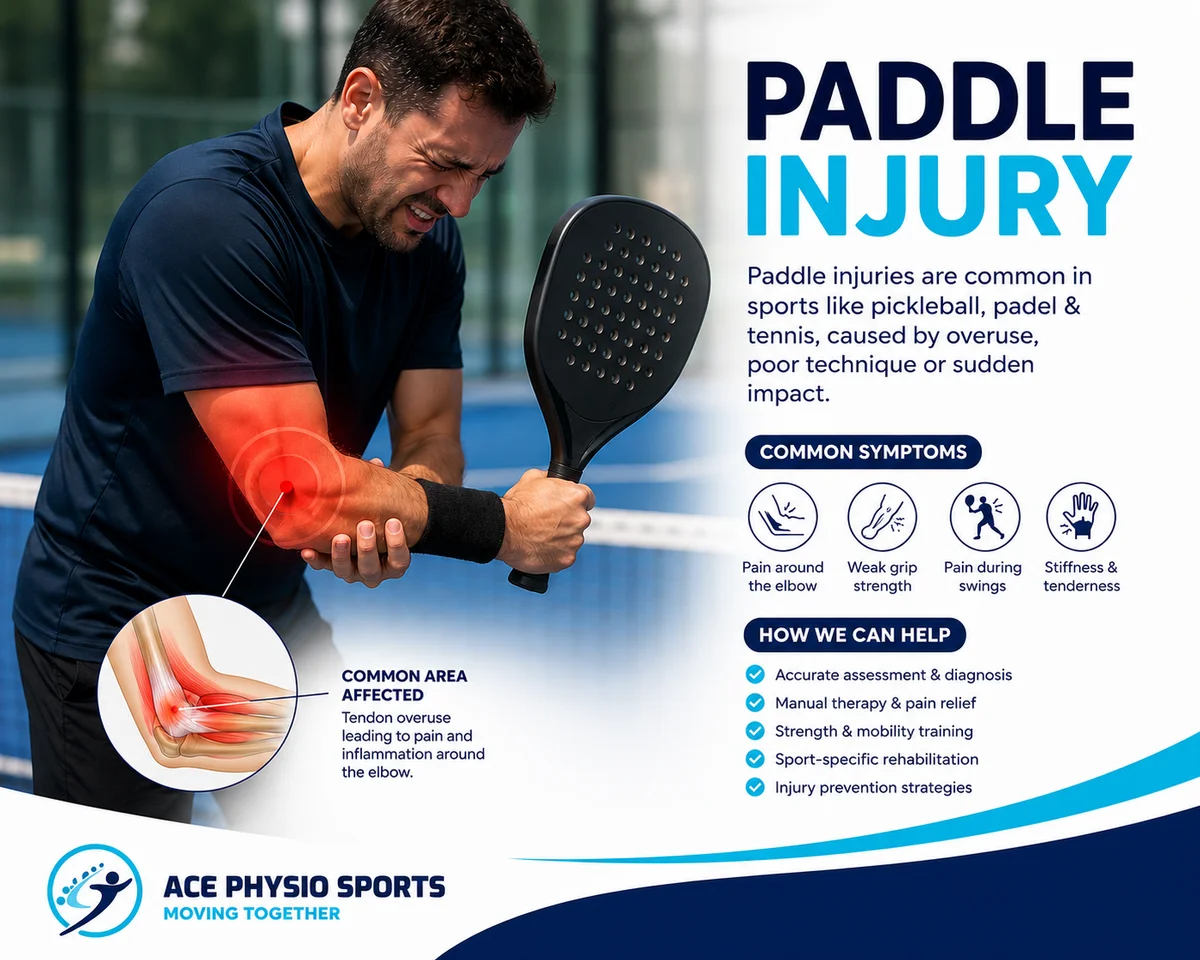
Padel has quickly become one of the fastest-growing sports in Singapore. Combining elements of tennis and squash, it is easy to learn, highly social, and suitable for players of different ages and fitness levels. Across Singapore, more people are discovering padel through community clubs, corporate events, and recreational leagues, making it one of the most popular emerging racket sports.
With this increase in participation, physiotherapists are also seeing a rise in players seeking treatment for shoulder, elbow, knee, ankle and lower back pain related to the sport. Many injuries develop gradually rather than after a single incident, often because the body is exposed to repetitive movements, sudden changes in direction, and explosive overhead shots without enough preparation or recovery.
At ACE Physio Sports, we regularly assess active individuals from East Coast Road, Katong, Marine Parade, Siglap, Bedok, and across Singapore who want to return to playing padel safely after an injury. Some patients are completely new to the sport, while others are experienced racket sport players transitioning from tennis or badminton. Although their playing experience varies, many of the underlying causes of injury are remarkably similar.
The encouraging news is that most padel-related injuries can be managed successfully with early assessment, evidence-based physiotherapy, and a structured rehabilitation programme. Identifying the cause of pain early often helps prevent a minor problem from becoming a longer-term condition that limits both sport and everyday activities.
Whether you have developed elbow pain after a weekend tournament, shoulder discomfort during overhead smashes, knee pain while lunging for the ball, or recurring ankle sprains on the court, understanding why the injury has occurred is the first step towards a safe recovery.
Why Are Padel Injuries Becoming More Common?
Padel is often described as a low-impact sport, but that does not mean it places little stress on the body.
Every match involves repeated acceleration, sudden stopping, quick lateral movements, lunging, jumping, twisting and overhead strokes. These movements demand excellent coordination, strength and joint stability.
For recreational players who may only play once or twice a week, the body is sometimes exposed to movements it is not fully prepared for. Others increase their playing frequency rapidly without giving muscles and tendons enough time to adapt.
In our clinical experience, injuries are often linked to one or more contributing factors rather than a single event. Common risk factors include:
- Sudden increases in playing frequency or match duration
- Poor warm-up before starting a game
- Reduced shoulder or hip mobility
- Weakness of the rotator cuff, core or lower limb muscles
- Previous ankle sprains or knee injuries
- Fatigue during longer matches
- Poor recovery between sessions
- Incorrect movement mechanics during overhead strokes or lunges
- Returning to play too soon after a previous injury
Many players assume pain is simply part of becoming fitter or improving their game. However, discomfort that persists, returns after every match, or gradually worsens usually indicates that the body's tissues are being overloaded rather than adapting successfully.
Which Parts of the Body Are Most Commonly Injured in Padel?
Although almost any joint can be affected, some areas experience significantly greater stress because of the way padel is played.
The most commonly affected areas include:
- Shoulder
- Elbow
- Wrist
- Lower back
- Knee
- Calf
- Achilles tendon
- Foot and ankle
Each of these areas experiences different forces during play. For example, the shoulder repeatedly absorbs the demands of overhead serves and smashes, while the knees and ankles work continuously to control rapid changes of direction and sudden deceleration.
Rather than treating pain in isolation, physiotherapists assess how your entire movement system works together. A seemingly isolated shoulder problem may be influenced by limited thoracic mobility, while recurring ankle sprains may stem from reduced hip strength or poor balance. Understanding these movement patterns helps create a rehabilitation programme that addresses the underlying cause rather than simply relieving symptoms.
Common Symptoms You Shouldn't Ignore
Some soreness after an intense match can be normal, particularly if you are new to the sport. However, persistent or worsening symptoms should not be dismissed.
Consider seeking a physiotherapy assessment if you experience:
- Shoulder pain during overhead shots or serves
- Pain on the outside or inside of the elbow after playing
- Knee pain while lunging, squatting or changing direction
- Recurrent ankle sprains or feelings of instability
- Achilles pain during the first few steps in the morning
- Lower back pain that continues after matches
- Swelling around a joint
- Weakness affecting your performance
- Pain that returns every time you play
- Difficulty performing everyday activities because of pain
Early assessment often allows rehabilitation to begin before a minor injury progresses into a more complex condition.
If your symptoms are affecting your performance, our Sports Physiotherapy Singapore service provides personalised rehabilitation programmes designed to help recreational and competitive athletes return to sport safely.
The Most Common Padel Injuries and How Physiotherapy Can Help
Every padel player moves differently, so injuries rarely have a single cause. Factors such as previous injuries, fitness level, playing technique, court movement, recovery habits and training load all influence which parts of the body become overloaded.
Below are the injuries we most commonly see in recreational and competitive racket sport athletes.
1. Shoulder Pain After Playing Padel
The shoulder is one of the hardest-working joints during padel. Every serve, smash and overhead volley requires the rotator cuff muscles and shoulder stabilisers to control high-speed movements while keeping the joint stable.
When these tissues are repeatedly overloaded, players may begin to notice discomfort during matches or aching afterwards.
Common symptoms
- Pain during overhead shots
- Difficulty serving with power
- Weakness when lifting the arm
- Pain reaching behind the back
- Clicking or catching sensations
- Night pain when lying on the affected shoulder
In many cases, shoulder pain develops gradually rather than after one specific shot.
Physiotherapy aims to identify whether the pain is coming from the rotator cuff, shoulder impingement, instability, muscle overload or another underlying condition before creating a personalised rehabilitation programme.
Learn more about our treatment AND conditions we treat under Shoulder Pain Physiotherapy
and Our Blog Page on Shoulder Pain Treatment where we have covered all information in detail and with a real patient success story.
2. Tennis Elbow and Golfer's Elbow
Despite the name, tennis elbow is one of the most common overuse injuries seen in padel players.
Repeated gripping, backhand strokes and impact through the racket place significant stress on the forearm tendons near the elbow.
Some players develop pain on the outside of the elbow (tennis elbow), while others experience pain on the inside (golfer's elbow).
Symptoms include
- Pain when gripping the racket
- Pain opening jars
- Reduced grip strength
- Pain during backhand shots
- Forearm tightness after matches
Ignoring these symptoms often leads to longer recovery times, as tendon problems usually worsen when the same activities continue without appropriate rehabilitation.
Physiotherapy focuses on reducing tendon overload, improving forearm strength, correcting movement mechanics and gradually restoring tolerance to play.
How we treat Tennis Elbow Pain and Golfer's Elbow Read here.
Learn More Information about various Elbow Pain we treat on this page Elbow Pain Physiotherapy and Treatment
3. Knee Pain During Padel
Padel involves hundreds of lunges, quick pivots and rapid changes of direction during a single match.
These repeated movements place considerable stress on the knee joint.
Depending on the underlying cause, pain may develop around the kneecap, inside the joint or along the surrounding tendons.
Common symptoms
- Pain when lunging
- Pain climbing stairs afterwards
- Swelling around the knee
- Stiffness after matches
- Pain when squatting
- Reduced confidence changing direction
Rather than treating only the painful knee, physiotherapists also assess hip strength, ankle mobility, balance and movement control because these areas frequently contribute to excessive knee loading.
Learn More and get more detailed Information about what are various conditions under Knee Pain Ace Physio Sports Provides.
And Have A look on our Blog Page on Knee Pain Physiotherapy with Real Patient Relief Success Story.
4. Ankle Sprains and Foot Pain
Quick direction changes are one of the defining characteristics of padel.
Although they make the game exciting, they also increase the likelihood of ankle sprains, particularly when players reach for wide balls or land awkwardly.
Many people return to the court once pain settles, but without restoring balance, strength and joint control, the ankle often remains vulnerable to repeated sprains.
Symptoms may include:
- Swelling
- Bruising
- Pain while walking
- Reduced confidence during side movements
- Feeling that the ankle may "give way"
Rehabilitation focuses on restoring strength, proprioception, agility and confidence before returning to full competition.
Learn More Information about what more areas we treat under Ankle Pain
And Foot Pain
And Have a Look On our detailed Blog post with happy patient success story having Foot & Ankle Pain
5. Lower Back Pain
Lower back discomfort is another common complaint among padel players.
Repeated rotation, bending and explosive movement can overload the muscles and joints surrounding the spine, particularly if the hips or core muscles are not working efficiently.
Pain often develops gradually over several weeks rather than after one specific match.
Common symptoms include:
- Back stiffness after playing
- Pain while bending forward
- Discomfort during serves
- Muscle tightness
- Difficulty twisting
Treatment focuses on improving movement efficiency rather than simply reducing pain.
A rehabilitation programme may include:
- Core strengthening
- Hip mobility
- Spinal mobility
- Movement retraining
- Gradual return to sport
Learn more about what more conditions we treat under Lower Back Pain and you can also check conditons we treat under Upper Back Pain too.
How Physiotherapy Helps Padel Players Recover
Successful rehabilitation involves much more than waiting for pain to settle.
At ACE Physio Sports, every rehabilitation programme begins with understanding why the injury occurred.
Your physiotherapist will assess:
- Joint mobility
- Muscle strength
- Balance
- Movement control
- Shoulder and hip mechanics
- Running and court movement patterns
- Previous injuries
- Training schedule
- Recovery habits
By identifying the underlying cause rather than simply treating symptoms, rehabilitation becomes more effective and helps reduce the likelihood of the injury returning.
Depending on your assessment findings, treatment may include:
- Evidence-based exercise therapy
- Manual therapy where appropriate
- Progressive strengthening
- Mobility exercises
- Balance and proprioception training
- Sport-specific movement retraining
- Return-to-play progression
- Education on training load and recovery
Rather than aiming only for pain relief, the goal is to help you move confidently and safely when you return to the court.
Current research suggests that structured exercise therapy, progressive loading and movement retraining are central to managing many sports-related tendon and muscle injuries. You can reference this with a link to a relevant PubMed review or the recent peer-reviewed review of padel injuries.
A Patient Success Story
A recreational padel player from Marine Parade visited ACE Physio Sports after experiencing persistent shoulder pain that had gradually worsened over several months. Initially, the discomfort only appeared during powerful overhead smashes, but it eventually began affecting everyday activities such as reaching overhead and lifting objects.
Following a comprehensive assessment by Vineet Bansal, Clinical Director and Principal Musculoskeletal & Sports Physiotherapist, the symptoms were identified as rotator cuff overload combined with reduced shoulder mobility and poor scapular control, rather than a tendon tear.
The rehabilitation programme focused on:
- Progressive shoulder strengthening
- Rotator cuff rehabilitation
- Scapular stability exercises
- Thoracic mobility
- Gradual return-to-play progression
- Advice on workload management and recovery
Over the following weeks, pain steadily reduced, shoulder strength improved, and the patient returned to playing regular padel matches with greater confidence and without the recurring symptoms that had previously affected performance.
Every patient's recovery journey is different. The treatment approach and recovery timeline depend on the specific diagnosis, injury severity, general health, and individual goals.
How to Prevent Padel Injuries
While no sport is completely injury-free, many padel injuries can be prevented with the right preparation, training habits, and recovery strategies. Whether you're new to the sport or play several times a week, looking after your body can help you stay on the court and reduce your risk of recurring injuries.
1. Warm Up Before Every Match
A proper warm-up prepares your muscles, joints and nervous system for the fast-paced movements required during padel.
Aim to spend 10–15 minutes performing:
- Light jogging or brisk walking
- Dynamic stretches
- Shoulder mobility exercises
- Hip mobility drills
- Calf activation
- Short acceleration movements
Starting a match with cold muscles increases the risk of strains and tendon injuries.
2. Strengthen the Muscles That Protect Your Joints
Many injuries occur because the body cannot cope with the demands placed on it rather than because of poor luck.
A well-designed strengthening programme should include:
- Rotator cuff muscles
- Shoulder stabilisers
- Core muscles
- Gluteal muscles
- Quadriceps
- Hamstrings
- Calf muscles
- Foot and ankle stabilisers
Strong supporting muscles improve movement efficiency while reducing unnecessary stress on joints and tendons.
3. Increase Playing Time Gradually
One of the most common mistakes recreational players make is increasing match frequency too quickly.
For example:
- playing once a week
- then suddenly entering tournaments
- or playing four consecutive days
Your tendons and muscles need time to adapt to increased training loads.
Gradually increasing court time allows tissues to become stronger while lowering injury risk.
4. Don't Ignore Persistent Pain
Many players continue playing despite recurring shoulder, elbow or knee pain because the symptoms initially seem manageable.
However, pain that:
- keeps returning
- worsens during matches
- affects daily activities
- limits performance
should be assessed early.
Early physiotherapy often means a shorter recovery compared with waiting until the injury becomes more severe.
5. Prioritise Recovery
Recovery is part of training.
Simple habits such as:
- adequate sleep
- hydration
- balanced nutrition
- mobility work
- rest days
allow the body to recover between matches and reduce cumulative overload.
When Should You See a Physiotherapist?
Some discomfort after a demanding match can be normal, especially if you're new to padel.
However, it's worth booking an assessment if you experience:
- Pain lasting longer than a few days
- Recurrent injuries
- Swelling around a joint
- Shoulder pain during overhead shots
- Elbow pain affecting grip strength
- Knee pain while changing direction
- Repeated ankle sprains
- Difficulty returning to your usual level of play
- Pain that interferes with work or daily activities
Early assessment often leads to faster recovery and reduces the risk of long-term problems.
Why Choose ACE Physio Sports?
At ACE Physio Sports, we believe successful rehabilitation starts with understanding why an injury occurred not just where it hurts.
Our experienced team provides evidence-based assessment and rehabilitation tailored to your sport, lifestyle and goals.
We regularly help patients from East Coast Road, Katong, Marine Parade, Siglap, Bedok and across Singapore recover from sports injuries and return confidently to the activities they enjoy.
Your rehabilitation may include:
- Comprehensive movement assessment
- Manual therapy where appropriate
- Progressive strengthening programmes
- Balance and agility training
- Sport-specific rehabilitation
- Return-to-play planning
- Injury prevention education
Whether you're preparing for your next social game or competitive tournament, our goal is to help you recover safely while reducing the likelihood of future injuries.
Conclusion
Padel is an exciting and fast-growing sport that offers excellent cardiovascular fitness, coordination and social interaction. Like any physically demanding activity, however, it also places repeated stress on the shoulders, elbows, knees, ankles and lower back.
The good news is that most padel injuries can be managed successfully with early assessment, evidence-based rehabilitation and a structured return-to-play programme. Addressing pain early rather than continuing to play through symptoms often leads to a quicker recovery and helps reduce the risk of recurring injuries.
If you're experiencing pain during or after playing padel, seeking professional advice can help identify the underlying cause and guide your recovery. With the right treatment and rehabilitation, most players can return to the court confidently and continue enjoying the sport they love.